
Corrugated boxes
Corrugated box business: how to start, run, and improve one
A practical operator playbook for starting, running, and improving a corrugated box manufacturing or trading business in India: what the business really sells, board-weight, blank-size, cost-per-box, trim-loss, paper-price pass-through, minimum-order, capacity-utilisation, and working-capital formulas with hand-checked ₹ examples, 3-ply and 5-ply specs, kraft paper buying, converting and printing, factory, boiler, pollution and fire basics, B2B buyer journeys, WhatsApp chatbots for size-and-rate enquiries, and when a website with a box calculator, a job-card web app, a shop-floor mobile app, or a logo actually helps. Business operations only, not engineering, legal, or safety advice.
 Nyravi AILearn playbookFirst-time corrugated box manufacturers and converters, packaging entrepreneurs moving from trading to making, owners of small corrugator and die-cutting units, box traders and packing-material dealers who want their own production, family factories adding printing and 5-ply, and existing box units that want better capacity use, lower waste, safer credit, and steadier margins
Who this guide is for
Read this if you want to open or run a business that turns kraft paper into corrugated sheets and boxes, or trades in them, and sells to e-commerce brands, FMCG and food makers, appliance and electronics firms, pharma and agri packers, exporters, and local factories. It is also for a packing material dealer who is tired of buying boxes from someone else at someone else’s margin, a manufacturer’s salesperson who wants to build his own unit, a family factory that has a corrugator and a half-empty second shift, an owner whose order book looks full and whose bank balance does not, and a founder who has watched one paper-price jump erase a quarter’s profit. If your orders are fine but your waste, capacity use, credit, or price pass-through are not, this playbook is for you.
The playbook covers the business around the board and the box: paper cost, board weight, blank size, trim, converting, capacity, quoting, credit, and growth. If you trade packing materials such as tapes, film, and bags and buy boxes as one line, read the packing material guide. If you make many kinds of products and need a general factory frame, see manufacturing. If you print labels, cartons, and flexible packs, the printing guide fits better. If you buy and sell waste paper and scrap, read scrap and recycling. A corrugated box business is judged on whether the box fits the product, whether it protects in transit, whether it arrives on the day, and whether the paper cost is passed through to the customer.
What a corrugated box business is
A corrugated box business is a manufacturing and trading business that converts kraft paper into corrugated board by gluing a fluted layer between flat liners, cuts, creases, prints, and joins the board into boxes of a customer’s size and strength, and sells them by the piece or by the kilo, with the design help, quality checks, and scheduled delivery that let a customer pack and ship on time. Revenue comes from boxes sold per month at a price above the cost of paper, conversion, and freight, and profit is limited by capacity use, the share of paper lost as trim and rejects, how fast paper-price changes reach your price, and how long customers take to pay.
Terms you will use every week
- Kraft paper: the liner and fluting paper bought by GSM and bursting factor (BF), the main raw material
- GSM: grams per square metre, the weight of a paper or a board
- BF: bursting factor, a strength rating of paper, and the reason two papers of the same GSM sell at different prices
- Ply: the number of paper layers in a board, such as 3-ply (two liners and one flute) or 5-ply (three liners and two flutes)
- Flute: the wavy middle layer, in profiles such as A, B, C, and E, which trade cushioning against stacking strength
- Take-up factor: how much longer the fluting paper is than the board, which raises the paper weight of the board
- RSC: regular slotted container, the common box that folds from one sheet with top and bottom flaps
- Blank: the flat sheet cut to size for one box, with creases and slots
- Trim loss: paper lost at the edges because the reel is wider than the blanks you cut from it
- BCT: box compression test, the load a box can take when stacked, often specified by customers
A corrugated box business is a working-capital-heavy, paper-price-driven conversion business. The product is made to order, the raw material is a commodity that moves with the market, and the profit is made or lost in waste, utilisation, and pass-through. The skill you manage most carefully is the link between paper price and box price.
Corrugated box business at a glance: the worked example in this guide
Key figures, all illustrative and to be replaced with your own plant data
- Plant: a 5,000 sq ft unit with a semi-automatic 3-ply corrugator, a printer-slotter, a die-cutter, and a stitching and pasting area, about 17 staff, and a rated converting capacity of 3,00,000 box-equivalents a month
- Typical box: a 400 × 300 × 300 mm regular slotted container in 3-ply, with a board weight of about 380 GSM, a blank of 1,445 × 610 mm, and a weight of about 0.335 kg
- Cost: about ₹15.60 of variable cost per box, with paper at ₹33 a kilo and 8% paper waste, and a selling price of ₹19.00, so about ₹3.40 of contribution per box
- Volume: about 2,20,000 boxes a month, or about 73,700 kg, which is about 73% of capacity, and ₹41,80,000 of sales
- Fixed cost: about ₹6,33,000 a month including a ₹50,000 owner draw and a ₹1,03,000 loan EMI
- Break-even: about 1,86,177 boxes a month, roughly 62% of the rated capacity
- Profit: about ₹1,15,000 a month on average, about ₹2,800 in July and about ₹2,64,600 in October
- Start-up investment: about ₹1,22,88,440, of which about ₹36,08,440 is working capital, with a payback of about 46 months on cash profit before EMI and owner draw
Treat these as a template for your own sheet, not as a promise. Paper prices, machinery, power cost, and buyer mix change everything. The point is to see which numbers move profit most: capacity use, paper waste, price pass-through, and credit days.
What a corrugated box business really sells
A buyer does not buy a box. A buyer buys a carton that fits the product without rattling, survives a stack in a warehouse and a drop on a truck, carries the right print, and arrives on the day the packing line needs it, at a price that stays steady for the month. The factory that answers “will it hold” and “can you deliver on Thursday” keeps the account. The factory that only quotes a rate per kilo wins the first order and loses the tenth.
A factory that quotes every size, every ply, and every flute to every buyer feels flexible and runs badly. Each extra spec adds set-ups, scrap, and a salesperson who cannot explain it. A factory that is known for one clear promise, such as “boxes for online brands, 3-ply and 5-ply, in runs of 2,000 and up, with a size-optimisation check”, “export-grade 5-ply with tested BCT”, or “fruit and vegetable cartons for the local season”, is easier to schedule, easier to cost, and easier to defend against a cheaper stranger.
How a corrugated box business differs from trading, printing, and general manufacturing
Owners often borrow numbers from a packing-material trader or a general factory and get the wrong cost sheet. A corrugated box unit buys raw material by the tonne, converts it with heavy machines, carries high fixed costs, and must keep the machines busy. That changes what you need to know about waste, capacity, and cash.
Where the lines fall
- Packing material trader: buys finished boxes and other packing from makers. See packing material if trading, not making, is your model
- General manufacturer: builds a product line with its own inputs. See manufacturing for plant planning, quality, and supplier management
- Printing business: sells printed output and design. See printing if flexible packs, labels, and folding cartons are your core
- Scrap and recycling: buys and sells waste paper and board. See scrap and recycling for how trim and rejects can earn money
- Logistics: moves goods and shares customers with you. See logistics for delivery planning and freight cost
- Packers and movers: use boxes as an input for their service. See packing and moving for a buyer that orders in seasonal bursts
Choose a model, a board range, and a scale before you buy a machine
A corrugated box business can look like many things, which is why new owners buy a machine before they know their customers. Pick the model that fits your capital, your power supply, and the buyers within a day’s drive, and treat every other model as a stage to reach later.
Common models and what they ask of you
- Box trading: buy boxes and sheets from makers and sell to small buyers, with low capital, thin margin, and credit risk
- Converter: buy corrugated sheets, then die-cut, print, slot, and stitch to size, with moderate capital and a dependence on sheet suppliers
- Integrated small unit: a semi-automatic corrugator plus converting, with the highest margin, the heaviest capital, and the biggest waste and utilisation risk
- Specialist maker: fruit and vegetable cartons, e-commerce mailers, export-grade 5-ply, or die-cut display boxes, with a clearer buyer and a spec-driven price
- Contract supplier to one large buyer: stable volume and tight price, with concentration risk
- Job work for another maker: use spare capacity on a conversion charge, with lower margin and less price risk
Decide these before you commit money
- The one or two buyer groups that will carry the first six months, and the box sizes and plies they use
- The paper suppliers you will use, the reel widths they offer, and the payment terms they demand
- The machine size and the reel width you will standardise on, because they decide your trim loss
- Power load, water, steam or hot-plate needs, and whether the site can support them safely
- The credit you can carry: how many days, to whom, and up to what limit
- The scale for year one: a trader or converter first, or an integrated unit sized to a visible order book
How a box unit works: from kraft reel to the buyer’s dock
Every corrugated unit follows the same shape: buy reels, mount and splice them, form the flute, glue the liners, cut the board to sheet size, die-cut or slot and crease, print, join, bundle, and dispatch. Machines and methods differ in detail, so this is a map, not a method.
A typical 3-ply box flow
- 1
1. Buy and store reels
Buy kraft reels by GSM, BF, and width, store them dry, upright, and off the floor, and reject reels with water damage or crushed cores.
- 2
2. Plan the run
Group orders by board spec and reel width, choose the reel width that gives the least trim for the blanks, and sequence jobs to cut changeovers.
- 3
3. Corrugate
Mount the reels, form the flute on the fluting medium, glue it to the liner with starch glue, join the second liner, dry, and cut to sheet.
- 4
4. Convert
Slot, crease, and print RSC boxes, or die-cut special shapes, with a first-off check of dimensions and print before the full run.
- 5
5. Join
Stitch or paste the manufacturer’s joint and bundle in counts the buyer can handle.
- 6
6. Test
Check size, board GSM, bursting or compression as agreed, print registration, and moisture, and record the result on a batch card.
- 7
7. Dispatch
Load by customer and route, raise the invoice and e-way bill where required, and take a signed or photographed receipt.
- 8
8. Recover scrap
Collect trim and rejects separately and sell them as waste paper, or return them to a recycler.
Start-up and monthly cost formulas
A corrugated unit needs a factory shed with power, water, and fire safety, a corrugator and converting machines, handling equipment, licences and consents, and, above all, cash to hold paper, finished stock, and credit. Founders most often under-count one line: working capital, which can be a third of the whole investment.
Cost per box: paper, waste, conversion, and freight
Paper is about three-quarters of the cost of a box, so a box price built on a guess about paper is a bet. Work out the weight of the box, the paper cost with waste, the cost to convert, and the freight, and run every quote from those numbers rather than from the price a competitor mentioned.
Break-even, utilisation, and profit
Because rent, salaries, and the loan EMI are paid whether you make 1,50,000 or 3,00,000 boxes, the number of boxes you must sell each month is the most important number in the plant. Put it where the whole team can see it, and test it against your leanest month, not your average one.
Pricing: price by the piece, paper-price pass-through, and minimum orders
Most buyers compare box rates between factories by the piece or by the kilo and give the order to the one who is cheapest that week. A factory that fights on price alone wins volume at a margin that disappears with the next paper-price move. A factory that sells fit, tested strength, on-time delivery, and a transparent paper-price clause can hold margin and still win the account.
Pricing habits worth keeping
- Price from board weight, paper cost with waste, conversion, and freight, and add a margin, not from a competitor’s message
- Quote with a validity date, a board spec, and a paper-price clause
- Charge for dies, plates, and small-run changeovers, or set a minimum order that covers them
- Keep a rate by the piece and by the kilo so you can answer both kinds of buyer
- Take advance for a new customer’s first order and set a credit limit before the second
- Never sell below variable cost to fill a machine, because you can always use the hours for job work
Registration, factory, boiler, and fire basics
A corrugated unit touches tax law, factory and labour law, electricity and boiler rules, pollution consent, and fire safety. The framework differs by state, size, and machinery. Treat this section as a checklist of things to confirm, not as instructions.
Confirm each with a qualified professional and the authority
- GST registration, the correct rate and HSN for boxes and board, and e-way bill requirements for goods above the prescribed value, confirmed with a chartered accountant
- Udyam (MSME) registration, which can help with bank credit and scheme eligibility
- Factory licence and registration under the Factories Act where headcount and power thresholds apply, and labour registrations such as provident fund and ESI where applicable
- Consent to establish and consent to operate from the state pollution control board, and the category your unit falls in for air, water, and waste
- Boiler registration, inspection, and a qualified operator if you use steam for corrugation, or the safety rules for any thermal oil or electric heating you use instead
- Electrical connection category, load, earthing, and a safe, inspected wiring plan for a plant with motors and heaters
- Fire NOC and fire-safety systems for a shed full of paper, board, and starch, including extinguishers, hydrants or sprinklers where required, and no smoking or open flame
- Machine guarding, lock-out routines, and training for operators on die-cutters, slotters, and cutters, since hand injuries are the common serious accident
- Any BIS or customer-specified standards for boxes, and whether food-contact or pharma buyers require extra documentation, which you should confirm with each buyer
- Import rules and standards if you buy kraft paper from abroad, and the tax treatment of scrap sales
- Insurance for the building, machinery, stock, and workers, with the true stock value declared, and for goods in transit
Quality, testing, and the factory floor
A box unit makes the same product thousands of times, so quality is a system, not an inspection at the gate. The buyer’s packing line, courier network, and stack height will find any weak box. A written spec, a first-off check, and a batch card cost little and save the account.
Systems worth writing down
- A customer spec sheet for every repeat job with size, ply, flute, GSM and BF, print, joint type, BCT or bursting target, and packing count
- A first-off approval at every changeover: dimensions, creases, slots, print registration, and joint strength, signed before the run
- A batch card with date, paper reel numbers and suppliers, board spec, machine, operator, and test results
- Incoming reel checks for GSM, moisture, and visible damage, with rejected reels returned or credited
- Simple in-house tests such as a bursting tester, a moisture meter, and a compression tester or a partner lab for BCT
- A rejection log by cause: crush, warp, wrong size, print shift, weak joint, or moisture, so a pattern shows within a week
- Humidity and storage control, because damp board warps and loses strength
- A maintenance plan for the corrugator, glue system, knives, and dies, since unplanned downtime costs about ₹2,452 an hour in lost contribution at full capacity
The team a corrugated box unit needs
A box unit works when each person owns a machine or a step and a checklist. A good estimator asks before quoting: what is the product, how heavy, how will it be stacked, how far will it travel. Hire for care and routine, train each operator on one machine before the next, and keep a maintenance technician close to the floor.
Roles that keep the machines busy and the quality steady
- Owner or plant manager: paper buying, price, key accounts, cash, and the weekly review
- Production supervisor and planner: run sequence, reel-width choice, changeovers, and daily targets
- Corrugator operator and assistants: reel mounting, glue and flute settings, board quality, and sheet handling
- Converting operators: printer-slotter, die-cutter, stitching and pasting, each trained on first-off checks
- Quality and stores: incoming reel checks, tests, batch cards, and rejection logs
- Maintenance technician: preventive maintenance, knives and dies, power and steam or heating systems
- Sales and estimating: quotes, specs, paper-price clauses, and customer follow-up
- Dispatch and drivers: loading, route, delivery proof, and collection notes
- Accounts: daily cash and credit, GST, e-way bills, and payroll, usually a part-time accountant
Pay the supervisor a base plus a visible bonus for utilisation, low waste, and on-time dispatch together. A bonus on output alone teaches people to run the wrong reel width and to skip first-off checks, which costs more than it earns.
The buyer journey from the first box size to the standing call-off
Most buyers do not switch box makers for a lower rate. They switch when a maker fails them: a late truck, a box that crushed, a print that shifted. The journey from a first enquiry to a standing schedule is where a small factory becomes a dependable one.
A standard journey
- 1
1. Qualify
Ask what the product is, its weight, how it is stacked and shipped, the box sizes, the monthly quantity, and who supplies today.
- 2
2. Specify
Agree the ply, flute, paper grades, joint, print, and test target, and check whether a smaller box would cut the buyer’s courier weight.
- 3
3. Sample
Make a plain or printed sample box, ideally a few pieces, and let the buyer test it on the line and in a stack.
- 4
4. Artwork and plates
Approve artwork in writing, make plates or dies, and record the plate or die charge.
- 5
5. Quote and order
Send a quote with spec, price by the piece and by the kilo, validity, paper-price clause, MOQ, payment terms, and take an advance for a new buyer.
- 6
6. Produce and test
Plan the run, make a first-off, record the batch card, and test before dispatch.
- 7
7. Deliver and invoice
Deliver on the promised day with the invoice and e-way bill, take a signed receipt, and follow up on any short or damaged count.
- 8
8. Schedule and review
Move the buyer to a monthly call-off schedule, review quality and cost each quarter, and look for a size or ply that saves them money.
A simple weekly rhythm
Run the plant on a short scoreboard
- Daily open: reel stock check, machine and glue check, planned runs for the shift, and a look at the dispatch list
- Daily close: boxes made by machine, trim and reject kilos, downtime hours and reasons, and dispatches completed
- Weekly: utilisation % against rated capacity, boxes made against plan, and orders waiting by age
- Weekly: paper waste % split into trim, set-up, and rejects, and rejection % by cause
- Weekly: paper price quotes received against the prices in open quotes, and any clause to trigger
- Weekly: receivables by customer and age, and cash against upcoming paper and EMI payments
- Monthly: contribution per box by customer, power and starch cost per box, maintenance and safety checks, licence and insurance calendar, and customer concentration
Money: the numbers that decide survival
Watch these every week and every month
- Boxes made, utilisation %, and contribution against the monthly break-even of about 1,86,177 boxes
- Paper cost per box, paper waste %, and the gap between paper price today and the price in open quotes
- Receivables by customer and age, and the share beyond 45 days
- Paper stock days and finished stock days, and cash tied up in each
- Loan EMI, power bills, and paper payments due against cash in hand and the cash-credit limit
- Cash in hand against three months of fixed cost, because a paper-price spike or a slow July can hit any month
- Customer concentration: sales from the top three customers as a share of the total
ROI formulas you can use this month
Marketing a corrugated box business in India
Box buyers search when they start selling online, when a courier return rate climbs, or when their usual maker slips a delivery. Marketing for a corrugated box business is mostly about being the maker who is easy to ask, quick to quote, and reliable on the day, with proof that the box holds.
What moves orders
- A complete Google Business Profile with photos of the unit and sample boxes, a phone number, and a WhatsApp number that is answered
- A box-size and rate request that returns a written quote within hours, with spec and validity
- Sample boxes in a few common sizes sent to online brands, small factories, and packers, with a spec card
- A size-optimisation offer that shows a buyer how a smaller or better-fitting box cuts courier weight and damage
- Listings on B2B directories and local manufacturer associations, with honest photos and specs
- Tie-ups with packing-material dealers and logistics firms for referral and overflow work
- Honest claims on strength and test results, backed by a report you can show
Reviews, relationships, and reputation
A box maker is judged by a few dozen buyers who talk to each other in seller groups, industry associations, and packing lines. One late truck before a festive dispatch is remembered. One call that says “we are re-running the lot tonight” is remembered too.
A routine that works
- Call each large buyer every month and ask what the line would change in size, strength, print, or timing
- Tag every complaint by cause: wrong size, crushed in transit, weak joint, print shift, late delivery, or short count
- Fix the cause with the biggest count first, tell the team, and measure the same complaint again next week
- Keep samples from every batch for a few months so a dispute can be checked against the record
- Ask satisfied buyers for a Google review or a referral to a neighbouring brand or factory, never as a condition of a discount
- Never argue publicly and never post a customer’s name, volumes, or prices without permission
Channels that bring orders
Rank them by contribution per box and by repeatability, not by volume alone
- Online brands and e-commerce sellers: frequent mid-size runs, print, and a good margin if you offer size optimisation
- FMCG, food, and appliance makers: steady schedules at tighter prices, with stronger specs and audits
- Pharma, electronics, and export packers: higher specs and documentation, with better price and slower approvals
- Fruit, vegetable, flower, and agri packers: strong seasonal peaks and wet-strength needs
- Packing-material dealers and traders: bulk buyers at thinner margin who also pass on referrals
- B2B directories and WhatsApp groups: lead sources that convert if you answer fast with a quote
- Repeat and referral buyers: the cheapest orders you will ever win, driven by reliability and a call-off schedule
Log the source and contribution of every new account for a quarter. You will see which channel gives profit and which gives volume that leaves you with nothing.
Automation that frees the owner
Automate these first
- A box calculator that turns length, width, height, ply, and print into blank size, weight, cost, and price from your own paper price and waste table
- Quotes with a standard template, validity date, paper-price clause, and a follow-up reminder
- A job card and batch record with reel numbers, spec, machine, operator, and test results
- A reel-width suggestion for each job, to cut trim before it is cut
- Paper stock and reorder alerts by grade and width, with supplier lead times
- Invoices, e-way bill reminders, credit-limit alerts, and weekly statements
- A weekly owner digest with boxes, utilisation, waste %, rejections, receivables by age, and open-quote exposure to paper prices
Where a WhatsApp chatbot helps
Buyers message at odd hours between packing runs: “Rate for 12 × 10 × 8 inch 3-ply, 5,000 pieces?”, “Can you print one colour?”, “When can you deliver?”, “Where is my truck?” If those messages wait until you are on the floor, the buyer has already asked another maker.
What a business WhatsApp chatbot is good for
- Collecting a size-and-rate request with length, width, height, ply, print, quantity, and pin code, then sending it to the estimator
- Giving an indicative rate only from a rate card or calculator you approve, with a validity date and a note that the paper-price clause applies
- Sharing lead times, plate or die charges, minimum orders, and delivery areas
- Sending order confirmation, production status, dispatch, and invoice copies
- Sending call-off reminders and weekly statements to buyers who have agreed to receive them
- Asking for feedback after delivery and routing complaints to the owner
- Handing the whole thread to a person for special pricing, strength or test claims, credit increases, quality disputes, and anything about food-contact or export documents
Why box makers use it
- Buyers already live on WhatsApp and send a size in a message more often than an email
- One shared inbox instead of the owner’s personal number
- Written sizes, specs, and rates reduce disputes about what was ordered
- Faster first replies, which is where most new accounts are won

Use WhatsApp for conversation, your website for a catalogue and a box calculator, and a web app when quotes, job cards, paper stock, and dispatch need to live in one place.
Growing a corrugated box business
Growth is not only more machines. It is higher utilisation, lower paper waste, a paper-price clause in every quote, shorter credit, and buyers who call off on a schedule. Add capacity from profit rather than from debt, and consider a second line only after the first runs smoothly without you on the floor.
Ways to grow responsibly
- Fill idle hours before adding a machine, because each extra box at current fixed cost adds ₹3.40 of profit
- Cut paper waste with a reel-width table and first-off checks, since each point of waste flows straight to profit
- Add a paper-price clause to every quote and a monthly review of open quotes against paper prices
- Win e-commerce and FMCG accounts with a size-optimisation offer and a call-off schedule
- Add 5-ply, printing, and die-cut capacity only after you have buyers for them, because each adds set-up and quality needs
- Sell trim and rejects cleanly as waste paper, and consider a baler
- Use spare capacity for job work for other makers in slow months, as the July example shows
- Open a second unit only after six months of target utilisation, waste, and on-time collections, and a manager who can run the first for two weeks alone
Where a website helps
Buyers search “corrugated box manufacturer near me”, “3-ply box price”, “shipping boxes for online sellers”, or “custom printed boxes” before they call. Your website should show the box types and plies with photographs, a box-size calculator or request-a-quote form, minimum order and lead times, printing options, delivery areas, a sample request, your GST and factory details, and a WhatsApp button, in that order. A site that shows only a logo and a phone number loses to the maker who answers the first three questions on one page. Add clear headings and structured data for a local business so search engines and AI assistants can quote your location, products, and contact details correctly.

Start from the AI website builder or build a website with AI and describe your box types, plies, minimum orders, delivery areas, and the three questions you want a buyer to answer on the page.
Where a web app helps
A web app helps when quotes, job cards, reel stock, production runs, dispatch, and receivables outgrow a notebook and a spreadsheet, and when a second shift or a second line makes one planner’s memory unreliable. A signed-in board that shows quotes by stage, jobs by machine and day, reel stock by grade and width, rejections by cause, and receivables by age gives the owner, the planner, and the supervisor the same answer. A box-cost calculator with your own paper price and waste table is often the first screen worth building.
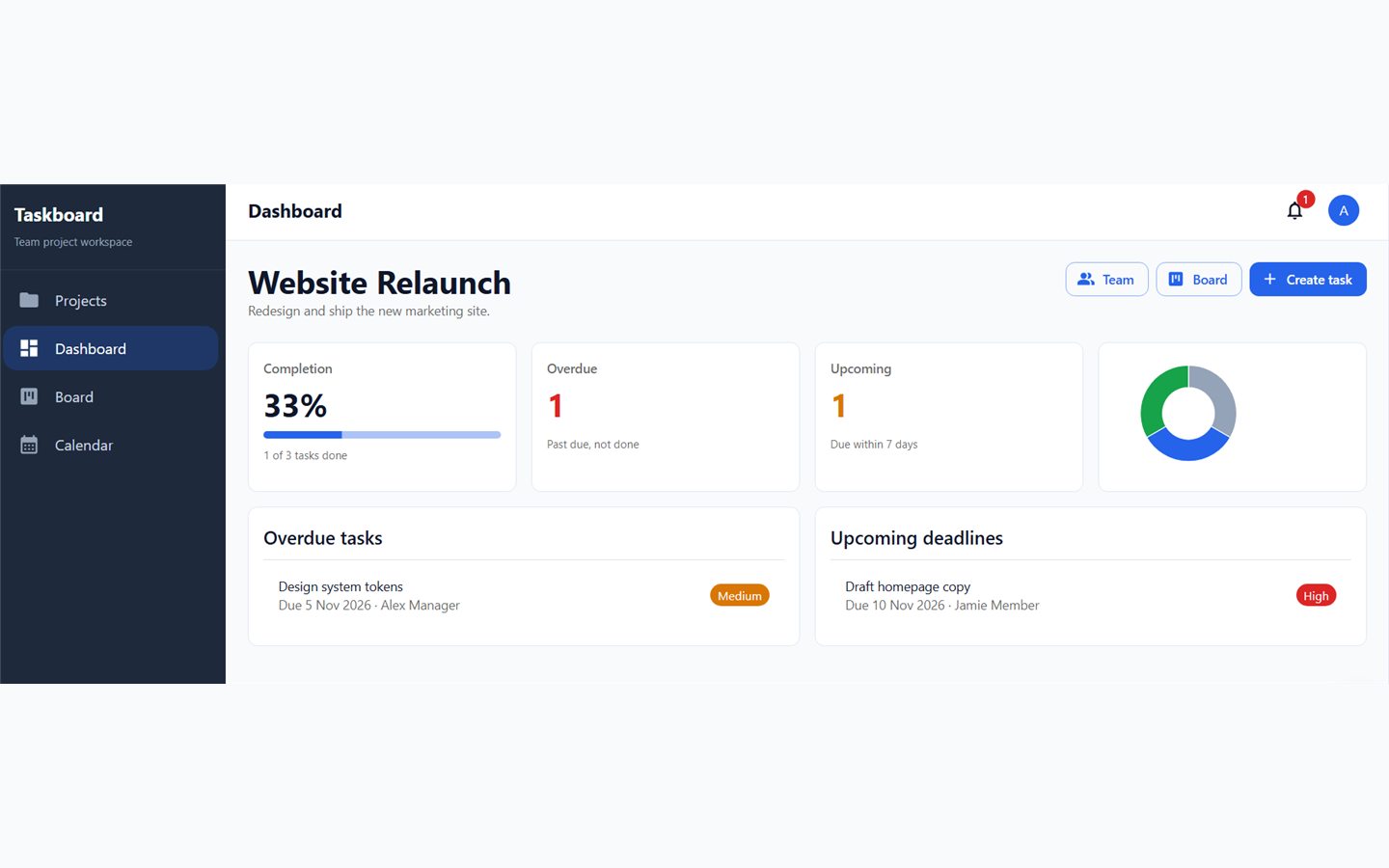
Open the AI app generator or the AI web app builder and describe the screens: box calculator and quote builder, job card and machine schedule, reel and paper stock, rejection log, dispatch, and receivables by age.
Where a mobile app helps
A mobile app suits the supervisor and the dispatch lead who need a first-off checklist with photos, a downtime entry with a reason, a rejection entry by cause, a reel receipt, a dispatch proof, and a quick box-cost lookup, all from a phone on the shop floor. Build it after your paper job card has worked for three months. A consumer app is rarely worth it for a single maker. Start from the AI mobile app builder.
Where a logo and brand mark help
A box-maker mark appears on a factory board, a delivery truck, a quote, a sample box, a bundle tag, a WhatsApp profile, and sometimes on the box itself as a small maker’s mark, so it should read on a stamp and in one colour. Pick a short name that is easy to say on a phone, a simple mark that suggests strength and packing without copying a famous brand, and a bundle label that shows spec and batch at a glance. Use the AI logo generator to explore marks, and test each on a rubber stamp and a small circle before you print.

A ninety-day plan if you are starting
- 1
Days 1 to 15
Visit three working box units, pick your model, buyer group, and box sizes, list your first fifteen buyers and the boxes they use, and ask two or three paper suppliers for reel widths, grades, and terms.
- 2
Days 16 to 45
Decide between trading, converting, or an integrated unit on the numbers, secure a site with power, water, and fire safety, apply for GST, Udyam, factory, and pollution consents, and build the box calculator and rate card from real paper prices.
- 3
Days 46 to 70
Order machinery with written capacity and service terms, train operators on first-off checks and batch cards, make sample boxes, send them to your first fifteen buyers, and take the first small orders on advance.
- 4
Days 71 to 90
Begin regular runs, record utilisation, waste, rejections, and downtime daily, review the weekly scoreboard, fix the three biggest gaps in waste, scheduling, or collections, and only then add credit accounts and a second spec.
A ninety-day plan if you already run a unit
- 1
Days 1 to 15
Measure honestly: utilisation, paper waste split into trim, set-up, and rejects, contribution per box by customer, receivables by age, downtime by cause, and open quotes against today’s paper price.
- 2
Days 16 to 45
Fix one leak: build a reel-width table to cut trim, add a paper-price clause to every quote, or chase and reset the ten oldest receivables, and set a minimum order that covers set-up.
- 3
Days 46 to 70
Fill idle hours with new accounts and job work, set up a preventive-maintenance plan, move your top customers to monthly call-offs, and sell trim and rejects cleanly.
- 4
Days 71 to 90
Lock the weekly scoreboard and plan the next two seasons. Only then consider 5-ply, a new printer, or a second shift.
Common failure patterns
- Buying a machine before knowing the buyers, and then running at 40% utilisation with the full EMI
- Quoting a fixed price for a long period with no paper-price clause, and losing a quarter’s profit to one paper rise
- Running jobs on the wrong reel width, so trim loss quietly eats the margin
- Taking small runs without a minimum order or a plate and die charge, so set-up cost exceeds the profit
- Selling on open credit to win volume, and then funding a customer’s business with the plant’s paper money
- Depending on one or two customers for more than half the sales
- Skipping first-off checks and batch cards, so a wrong size reaches a full truck
- Letting maintenance slip, so an unplanned breakdown stops the bottleneck for days
- Running a shed full of paper and starch with poor wiring and low insurance, and losing everything to one fire
- Opening a second line before the first runs smoothly without the owner on the floor
When you are ready to build with Nyravi
Use this guide to decide what the business needs. When the next step is a maker website with a box-size calculator and a request-a-quote form, a quotes-and-jobs dashboard, a shop-floor app for first-off checks and downtime, or a brand mark for your sample boxes and trucks, open Nyravi and describe that product. Keep the brief short: who uses it, what they open first, and what they finish.
If you want help writing that description, ask on Support. Start on the [home page](/), or jump to the product pages linked above. For WhatsApp chatbots, start at cognitivesys.io. The operation comes first. The build carries the system once the system is clear.
Questions
What is a corrugated box business?+
A corrugated box business is a manufacturing and trading business that converts kraft paper into corrugated board and boxes, or trades in them, and sells them by the piece or by the kilo to e-commerce brands, factories, and packers. It earns the margin between the cost of paper, conversion, and freight and the price per box, and it is limited by capacity use, paper waste, paper-price pass-through, and credit days.
How do I start a corrugated box manufacturing unit in India?+
Start by visiting three working box units and listing your first fifteen buyers and the box sizes they use, then decide between trading, converting, or an integrated unit based on your capital and order book. Secure a site with power, water, and fire safety, register for GST, Udyam, factory, and pollution consents, order machinery with written capacity terms, build a box calculator and rate card from real paper prices, and take early orders on advance.
How much does it cost to start a corrugated box business?+
A box-trading business can start with ₹10 lakh to ₹25 lakh, while a 5,000 sq ft integrated unit with a semi-automatic 3-ply corrugator and converting machines like the worked example in this guide needs about ₹1,22,88,440, including ₹70,00,000 of plant and machinery and ₹36,08,440 of working capital. Machinery, power, paper terms, and city change the total, so get written quotes for your own plan.
How much profit can a corrugated box unit make?+
Profit depends on capacity use, paper waste, price pass-through, and credit days, not on machine size alone. In this guide’s example, ₹3.40 of contribution per box and ₹6,33,000 of monthly fixed cost break even at about 1,86,177 boxes a month, and 2,20,000 boxes earn about ₹1,15,000 a month, about ₹2,800 in July and ₹2,64,600 in October, while the full 3,00,000 box capacity would earn about ₹3,87,000.
How do I calculate the cost and price of a corrugated box?+
Work out the blank size from the box length, width, and height, multiply the blank area by the board weight to get the box weight, then divide weight times paper price by one minus the paper waste, and add conversion, printing, stitching, and freight. In this guide’s example a 400 × 300 × 300 mm 3-ply box weighs about 0.335 kg, costs ₹12.01 in paper at ₹33 a kilo and 8% waste, ₹15.60 in total variable cost, and sells at ₹19.00.
How do I protect my margin when kraft paper prices change?+
Put a paper-price clause in every quote with a short validity and a stated adjustment, and review open quotes against paper prices every week. In this guide’s example, a ₹2 a kilo paper rise adds about ₹0.73 to each box and about ₹1,60,217 a month at 2,20,000 boxes, and passing it on moves the price from ₹19.00 to ₹19.73, while leaving it unchanged cuts contribution from ₹3.40 to ₹2.67.
What licences are needed for a corrugated box factory in India?+
You will usually need GST registration, Udyam registration for credit and schemes, a factory licence where headcount and power thresholds apply, consent to establish and operate from the state pollution control board, and a fire NOC, and a boiler registration and operator if you use steam. Provident fund, ESI, electrical safety, and machine-guarding rules may also apply. Rules vary by state and size and change over time, so confirm with a qualified adviser and the authority.
How do I reduce paper waste and raise capacity use in a box unit?+
Standardise on the reel widths that suit your common blanks, keep a box-size against reel-width table, check first-off at every changeover, plan runs to cut changeovers, and set a minimum order that covers set-up cost. In this guide’s example, cutting paper waste from 8% to 6% saves about ₹56,232 a month, a wrong 1,500 mm reel adds ₹2.59 a box, and 10 more points of utilisation add about ₹1,02,000 a month of profit.
Can a WhatsApp chatbot help a corrugated box business?+
Yes, a WhatsApp chatbot can collect box size, ply, print, quantity, and pin code, give an indicative rate from a calculator you approve with a validity date, share lead times and minimum orders, send order and dispatch updates, and ask for feedback, while handing special pricing, strength claims, and credit decisions to a person. CognitiveSys, the parent company behind Nyravi, builds WhatsApp chatbots and shared inboxes. Start at cognitivesys.io.
Does a corrugated box business need a website, an app, or Nyravi?+
A corrugated box business benefits most from a simple website with box types, plies, minimum orders, a box-size calculator or request-a-quote form, and a WhatsApp button, then from a web app once quotes, job cards, reel stock, and dispatch outgrow a spreadsheet. A shop-floor mobile app helps after the paper job card works. Nyravi can build the website, dashboard, floor app, or logo from a plain-language description. For WhatsApp chatbots, start at cognitivesys.io. This guide covers business operations only, not engineering or legal advice.