
Namkeen & farsan
Namkeen and farsan business: how to start, run, and improve one
A practical operator playbook for starting, running, and improving a namkeen, farsan, and savory snacks manufacturing-and-retail business in India: what the business really sells, per-pack cost, trade-margin and break-even formulas with checked ₹ examples, FSSAI, labelling and packaging rules, a production-and-sales team, distributor and retailer pricing, batch and shelf-life discipline, Diwali cash-flow, WhatsApp chatbots for retailer and gifting orders, and when a website, order web app, sales-rep mobile app, or logo actually helps. Business operations only, not food-safety or legal advice.
 Nyravi AILearn playbookFirst-time namkeen and farsan founders, sweet-shop and home-kitchen snack makers moving to a packed brand, family units selling sev, bhujia, chakli, gathiya, khakhra and chivda, and existing manufacturers that want steadier batches, better trade margins, and fewer stale returns
Who this guide is for
Read this if you want to make and sell sev, bhujia, mixture, chivda, gathiya, chakli, khakhra, mathri, banana chips, farali snacks, or a regional savory range, whether you fry in a small shed, run a sweet-shop counter that wants a packed brand, or already supply kirana shops and want a bigger route. It is also for a home cook with a loved recipe, a family that has sold loose namkeen for decades, and an owner whose Diwali is a rush and whose May is empty. If you sell well but keep taking back stale stock, this playbook is for you.
The playbook covers the business around the snack: batch cost, oil and besan swings, trade margins, shelf life, labelling, and the distribution route. If you sell mostly mithai and fresh sweets across a counter, read the sweet shop guide. If you make many kinds of goods in a factory, see manufacturing. If you sell packed goods through your own store, the kirana and grocery guide is closer. If you sell nuts and gift boxes, read dry fruits. A namkeen business is judged on crispness, consistency, shelf life, and how fast a pack sells off the shelf.
What a namkeen and farsan business is
A namkeen and farsan business is a food manufacturing-and-retail business that makes fried, roasted, or baked savory snacks in batches, packs them in labelled pouches or loose by weight, and earns the margin between batch cost and what retailers, distributors, and direct customers pay. Revenue comes from packed sales through kirana and modern retail, your own counter, festive gifting, online orders, and institutional supply, and it is capped by batch capacity, shelf life, and the trade margin you give away.
Terms you will use every week
- Batch: one production run of a single product with a batch code, date of manufacture, and a record of ingredients and oil
- Yield loss: the share of production lost to breakage, rejects, samples, and trimming, expressed as a percentage
- Cost per saleable kg: total batch cost divided by the kilograms that actually reach a pack
- MRP: the maximum retail price printed on the pack, with the rules of packaged-commodity labelling applying
- Trade margin: the share of price that a retailer or distributor keeps, such as 20% for a retailer and 8% for a distributor
- Net realisation: what you actually receive per pack after all trade margins and schemes
- Shelf life: the period for which the pack stays crisp and safe under stated storage, printed as ‘best before’ or similar
- Frying oil quality: how many times oil is reused and how it is monitored and discarded under the rules that apply
A sweet shop sells fresh goods to people who walk in. A namkeen maker sells a product that must stay crisp on a shelf for weeks, travel in a carton, and pass through a chain of people who each take a cut. The skill you manage most carefully is not the recipe. It is the discipline that makes batch 400 taste like batch 1.
What a namkeen business really sells
A shopper does not buy 200 grams of sev. She buys the crunch she remembers, a pack that is not oily or stale, a price that feels fair beside the big brands, and a taste that is the same every time she buys it. A kirana owner does not buy a brand. He buys sell-through, a margin that is better than the next brand, and a supplier who does not leave him with expired stock.
A range of 40 products looks like variety and runs like chaos. Every extra item adds a mould, a recipe, a pack size, and a slow-moving stock line. A range of eight products with two hero items, a clean pouch, and a clear date is easier to make, easier to sell, and easier to reorder. A hero product that sells every week pays for the experiments.
How namkeen differs from a sweet shop, a factory, and a grocery
Owners often borrow a model from nearby businesses, and the borrowing creates the wrong cost sheet. A namkeen maker is part kitchen, part small factory, part distributor. That changes how you plan, price, and measure.
Where the lines fall
- Sweet shop: fresh goods, a counter, a festive peak, and a short shelf life. A namkeen maker has a longer shelf life, a pack, and a trade route. See sweet shop for the counter model
- Manufacturing: a factory with many product lines and industrial processes. A namkeen unit is a small food factory with a few product lines. See manufacturing for the general case
- Kirana and grocery: you buy packed goods and sell them. A namkeen maker sells to kirana owners and must earn their shelf space. See kirana and grocery for the retailer’s view
- Dry fruits: a trading and gifting business with different cost drivers. See dry fruits if you add gift boxes
- Bakery: baked, short shelf-life goods with an oven and a counter. See bakery if you add baked snacks
Choose a focus before you buy machines
Namkeen can be made from a dozen doughs and flours, and every machine tempts you to add a product. Pick the hero products, the pack sizes, and the route you can serve every week, and let the rest be festive extras.
Decide these before you commit money
- Hero products: for example sev, bhujia, mixture, gathiya, or chivda, with two or three variations each
- Process: fried, roasted, or baked, which sets your equipment, oil use, and shelf life
- Customer: own retail counter, kirana shops, modern trade, online, gifting, institutions, or a mix with a clear lead
- Geography: the districts or cities you can reach by your own van within a day
- Pack sizes and price points, for example ₹10, ₹20, and ₹60 packs, and a loose counter
- Veg, Jain, farali, low-oil, or regional specialities that make your pack different from the big brands
- Scale: kitchen scale, small-unit scale, or semi-automatic line, and the capacity per day that fits your cash
Start-up and monthly cost formulas
A namkeen unit needs a licensed, drained, and ventilated space, frying and packing equipment, printed packaging in minimum order quantities, and cash for months while retailers pay slowly. The licence, the packaging, and the working capital are the lines founders cut and regret.
Pack economics: what one pouch earns
Namkeen margins live in the third decimal of the recipe. Work out batch cost per saleable kilogram, add the pack, and then work backwards from the trade price to see what each pouch really earns.
Break-even: packs per month
Rent, salaries, and power are paid whether you make 10,000 or 30,000 packs. The number of packs you must sell each month, at the mix of routes you actually have, is the number to put on the production board.
Process, shelf life, and quality control
A namkeen pack travels days or weeks from your fryer to a shopper’s kitchen. Anything that goes wrong in oil, moisture, packing, or storage shows up as a stale or rancid pack, and the shopper blames your brand, not the shelf. Quality is a system, not a taste test.
Systems worth writing down
- A written recipe and process card for every product with weights, temperatures, times, and a photograph of the finished product
- A batch record with date, batch code, ingredient lots, oil used, operator, and quality checks, kept for each run
- A frying-oil rule: how many times oil is reused, how it is checked, and when it is filtered, topped up, or discarded, set from FSSAI guidance and your own tests
- A cooling and drying step before packing so no steam or warmth is trapped in the pouch
- A packing rule for pouch material, seal strength, weight tolerance, and where applicable a gas flush, set with your packaging supplier
- A shelf-life trial: store samples under normal conditions and test them for crispness and smell at set intervals before you print a ‘best before’ date
- First in, first out in the store and the van, with date labels on cartons
- A pest-prevention, handwashing, hairnet, and clean-uniform routine checked every shift
- A customer complaint and recall procedure that can trace a pack to a batch within minutes
Registration, licences, labelling, and packaging basics
A namkeen manufacturer touches food-safety law, packaged-commodity law, plastic and packaging rules, factory and fire rules, labour rules, and tax law. The framework differs by state and scale. Treat this section as a checklist of things to confirm, not as instructions.
Confirm each with a qualified professional and the authority
- FSSAI registration or licence for the manufacturing premises, depending on turnover and capacity, with the licence number printed on every pack
- GST registration and the correct rate, HSN code, and invoicing for your products, confirmed with a chartered accountant
- Udyam (MSME) registration where it helps with schemes and credit, and a shop or factory registration where required
- Packaged-commodity rules under Legal Metrology: net quantity, MRP, manufacturer’s name and address, date of packing, and consumer-care details on the pack
- FSSAI labelling: ingredient list, vegetarian mark, allergen declaration, nutritional information, batch or lot number, and best-before or use-by dates as the rules require
- Frying-oil quality limits and used-oil disposal through authorised collectors, as the food-safety authority requires
- State pollution-control consent where your unit’s size or process requires it, and a fire safety clearance with a safe gas and exhaust setup
- Plastic-packaging obligations for brand owners and producers, including recycling and extended-producer responsibility rules where they apply
- Trademark for your brand and barcode registration if you plan to sell through modern retail or online marketplaces
- Staff hygiene and food-handler training, medical fitness records, and water-quality tests where rules ask for them
The team a namkeen business needs
A namkeen business run by one founder tops out at about 100 kg a day, because the founder is either frying or selling. Past that, production, packing, quality, and sales need separate hands and written checklists.
Roles that keep batches consistent
- Owner: product, recipe control, pricing, distributor and retailer relationships, and the monthly review
- Master karigar or head cook: owns the recipes and trains new cooks, with a written card for every product
- Fryer and machine operators: run sev, gathiya, and frying stations to the batch card
- Packing team: weighs, seals, labels, and cartons, with a weight check every 20 packs
- Quality and hygiene lead: signs oil, cooling, seal, and hygiene checks every shift and keeps retained samples
- Store keeper: receives raw material, checks lots, and runs first in, first out for stock
- Sales and distributor executive: visits retailers, takes orders, collects payments, and reports shelf data
- Driver and helper: deliver on a planned route with a stock and payment sheet
- Accounts: invoices, GST, payroll, receivable ageing, and the monthly profit sheet
Pay the master karigar a base plus a bonus linked to consistency, low yield loss, and clean batch records, not to volume alone. A karigar paid for volume will skip the cooling step.
Pricing, trade margins, and pack sizes
A shopper compares your pack with the big-brand pack beside it. A retailer compares your margin with the margin on the next brand. If either number is wrong, the pack stays on the shelf. Build the price from the trade chain backwards.
Pricing habits worth keeping
- Offer a small set of price points, such as ₹10, ₹20, and ₹60 packs, that retailers can stock and shoppers can remember
- Never cut weight silently. If a cost rises, raise the price or change the pack size and say so clearly
- Re-cost your hero products each quarter, because besan, oil, and packaging prices move
- Keep one clear price list for distributors and retailers, with margin, scheme, and credit terms in writing
- Price a loose counter and gift boxes from their own cost, not from the packet price
- Review trade margins against what sells. A higher margin on a slow product earns nothing
The customer and batch journey from order to reorder
Namkeen sells in two journeys at once: the retailer’s decision to stock you, and the shopper’s decision to buy you again. A weak link in either breaks the chain.
A standard journey
- 1
1. Sample and pitch
Take fresh samples and a price list to a retailer, with margin, shelf life, and the delivery day stated plainly.
- 2
2. Trial order
Start with a small order of the hero products, a display tray, and a clear reorder date, on cash or short credit.
- 3
3. Production plan
Plan batches against confirmed orders and stock, so the pack leaves the unit within days of frying.
- 4
4. Pack and dispatch
Weigh, seal, label, and carton, record the batch code against the invoice, and load first in, first out.
- 5
5. Delivery and display
Deliver to a planned route, rotate old stock, tidy the shelf, and photograph the display.
- 6
6. Sell-through check
Count what sold, collect payment, and take back stale stock under the agreed rule.
- 7
7. Shopper feedback
A QR code or a WhatsApp number on the pack invites feedback, and complaints are traced to a batch.
- 8
8. Reorder
A reminder on the day the stock should run low, with a suggested order based on last sell-through.
A simple weekly rhythm
Run the unit on a short scoreboard
- Daily: production against plan, yield loss, oil checks, packing weights, and a retained sample for each batch
- Daily: orders received, dispatches made, collections, and any complaint with its batch code
- Weekly: stock of raw material, packaging, and finished goods by age, with anything past two-thirds of shelf life flagged
- Weekly: sales by product, route, and retailer, with the top and bottom five retailers by sell-through
- Weekly: receivables aged 15, 30, and 60 days, and any retailer on stop-supply
- Weekly: returns and stale pack reports by product and route
- Monthly: cost per saleable kg, blended contribution, oil and besan price changes, equipment servicing, and a licence and training calendar check
Seasons, festivals, and cash flow
Namkeen demand rises at Diwali, Navratri and fasting seasons, wedding months, and holidays, and dips in the hot, slow weeks. Cash behaves the opposite way: you buy raw material and packaging before the festival and collect from retailers weeks after it.
Cash-flow rules worth following
- Map your calendar for the year: festive, shoulder, and slow months with expected output in each
- Pre-book festive gift boxes and bulk orders with an advance to fund raw material and packaging
- Buy besan and oil in stages against a price plan, and avoid storing more than the shelf life of the raw material allows
- Collect weekly in the festive month, and stop supply to retailers with overdue balances
- Keep three months of fixed cost in reserve before adding a new route or machine
- Plan slow-month products such as farali or low-oil lines, and institutional orders that keep the team busy
Money: the numbers that decide survival
Watch these every week and every month
- Packs sold and net realisation by route, product, and pack size
- Cost per saleable kg and yield loss compared with the recipe card
- Oil and besan price against your last quote, and what a ₹10 move costs you per month
- Returns and stale stock in rupees and as a share of sales
- Receivables by retailer and distributor, aged 15, 30, and 60 days
- Cash in hand against three months of fixed cost, because a slow quarter will arrive
- Complaints per 1,000 packs, traced to batch
ROI formulas you can use this month
Marketing a namkeen brand in India
Namkeen is bought on habit and taste. A new pack gets one trial, so the first pack must be fresh, the shelf must be tidy, and the price must feel fair. Win the retailer first, and the shopper follows.
What moves packs
- Fresh samples to retailers and shoppers in your first 100 outlets, with a clear margin and shelf-life promise
- A clean, readable pouch with a front that names the product, the weight, and a taste cue in a few words
- A shelf display tray, a counter dispenser, or a small standee for retailers who commit to a monthly order
- A WhatsApp catalogue and price list for retailers and gifting buyers
- A Google Business Profile for your counter or unit with photos, hours, and a phone that is answered
- Short videos of the fresh batch, the kitchen, and the packing, with no exaggerated claims
- Festive gift boxes and corporate gifting offers for Diwali, Navratri, and weddings, booked early
- Tie-ups with sweet shops, caterers, tiffin services, and canteens that need bulk namkeen
Reviews and reputation
A namkeen brand is judged by two audiences: the retailer who decides whether you stay on the shelf, and the shopper who decides whether she buys you again. One stale pack can end a retailer’s order. One review that says ‘oily and soft’ on a marketplace can end a month of sales.
A review routine that works
- Ask retailers monthly what is selling, what is slow, and what the shoppers say, and write it down
- Ask shoppers for a review through a QR code on the pack or a WhatsApp message after an online order
- Reply to every review within 48 hours, thanking the good ones and offering a call and a replacement for the bad ones
- Tag each complaint by cause: stale, oily, too salty, foreign particle, short weight, broken seal, or wrong date
- Trace every complaint to a batch, check the retained sample, and tell the team what changed
- Treat any food-safety complaint as urgent: stop the batch, record what you did, and follow the rules that apply to a recall
Channels that bring orders
Rank them by contribution per pack, not by volume
- Your own counter and a small retail outlet: the highest contribution, and a place to test new products
- Direct supply to kirana and sweet shops on a planned route: strong contribution and direct feedback
- Distributors and sub-distributors: reach and volume at a lower contribution, with credit risk
- Online marketplaces and your own website: higher contribution on a good day, with courier, returns, and packaging cost
- Festive gifting and corporate orders: large tickets booked in advance with a known quantity
- Institutional buyers such as hotels, canteens, caterers, and tiffin services, with steady weekly orders
- Modern trade and supermarkets: wide reach, long payment cycles, and strict margin and listing fees
Track the route of every pack in your invoice sheet. After a quarter you will know which channel gives you profit and which one only gives you volume.
Automation that frees the owner
Automate these first
- Order confirmation and invoice delivery for every retailer and distributor order
- Reorder reminders based on each retailer’s last order and typical sell-through
- Payment reminders at 7, 15, and 30 days, with a statement and a UPI link
- Production planning sheets generated from confirmed orders and current stock
- Stock alerts for besan, oil, and packaging when levels fall below a set limit
- Batch and expiry reports that flag finished stock nearing the end of its shelf life
- A weekly digest to the owner: sales, returns, receivables, yield loss, and complaints
Where a WhatsApp chatbot helps
Retailers, caterers, and gifting buyers message at all hours: “Is the 200 g sev available today?”, “What is your rate for 50 boxes before Diwali?”, “Can you deliver to the shop on Thursday?”, “Do you have a Jain range?” If those messages wait until the owner comes back from the fryer, the order has already gone to another brand.
What a business WhatsApp chatbot is good for
- Answering product, pack size, price, scheme, delivery day, and shelf-life questions from facts you approve
- Taking repeat retailer orders from known accounts and sending them to a sheet or order system
- Collecting gifting and bulk enquiries with quantity, date, address, and budget, then alerting a person
- Sending invoices, payment reminders, and delivery updates
- Sharing a PDF catalogue and festive gift-box offers with opted-in buyers
- Asking shoppers and retailers for a review or feedback after an order
- Handing the whole thread to a person for complaints, returns, allergen questions, and anything urgent or food-safety related
Why namkeen makers use it
- Retailers and caterers already run their business on WhatsApp
- One shared inbox instead of the owner’s personal number
- Order messages arrive when the owner is least free
- Faster first replies, which is where festive gifting orders are won
Use WhatsApp for conversation, your website for the proof and orders, and a web app when retailer accounts, batches, and invoices need to live in one place.
Growing a namkeen business
Growth is not only more products. It is more sell-through per outlet, fewer returns, a better route mix, and steadier income in the months when festivals are far away.
Ways to grow responsibly
- Raise sell-through in your existing retailers before you add new routes
- Move a share of volume to direct retailers and your own channel to improve contribution per pack
- Add a second hero product that reuses the same flour, oil, and fryer, before a new process
- Launch gift boxes and corporate packs that use existing products, and book them early
- Add institutional supply to caterers and tiffin services to smooth slow months
- Invest in a better packing line or gas flushing once returns prove the shelf-life problem is in the pack
- Consider a second unit or a co-packing arrangement only after the first runs at target yield and cash flow with the owner away
Where a website helps
Gifting buyers, caterers, and NRI families search for a trusted namkeen brand before they order. Your website should show your products with photographs and weights, price list, ingredients and allergen information, shelf life, how to order, delivery areas, trade enquiry form, FSSAI number, and a WhatsApp button, in that order. A site with one blurry packet and a phone number loses to the brand that answers every first question on one page.
Start from the AI website builder or build a website with AI and describe your products, pack sizes, delivery area, and the three questions you want a buyer to answer on the page.
Where a web app helps
A web app helps when retailer orders, batch records, stock, and receivables outgrow a notebook and a spreadsheet, and when two people might promise the same stock to two buyers. A signed-in board that shows orders by route, batches by date, stock by age, and receivables by retailer gives the owner, the sales team, and the production lead the same answer.
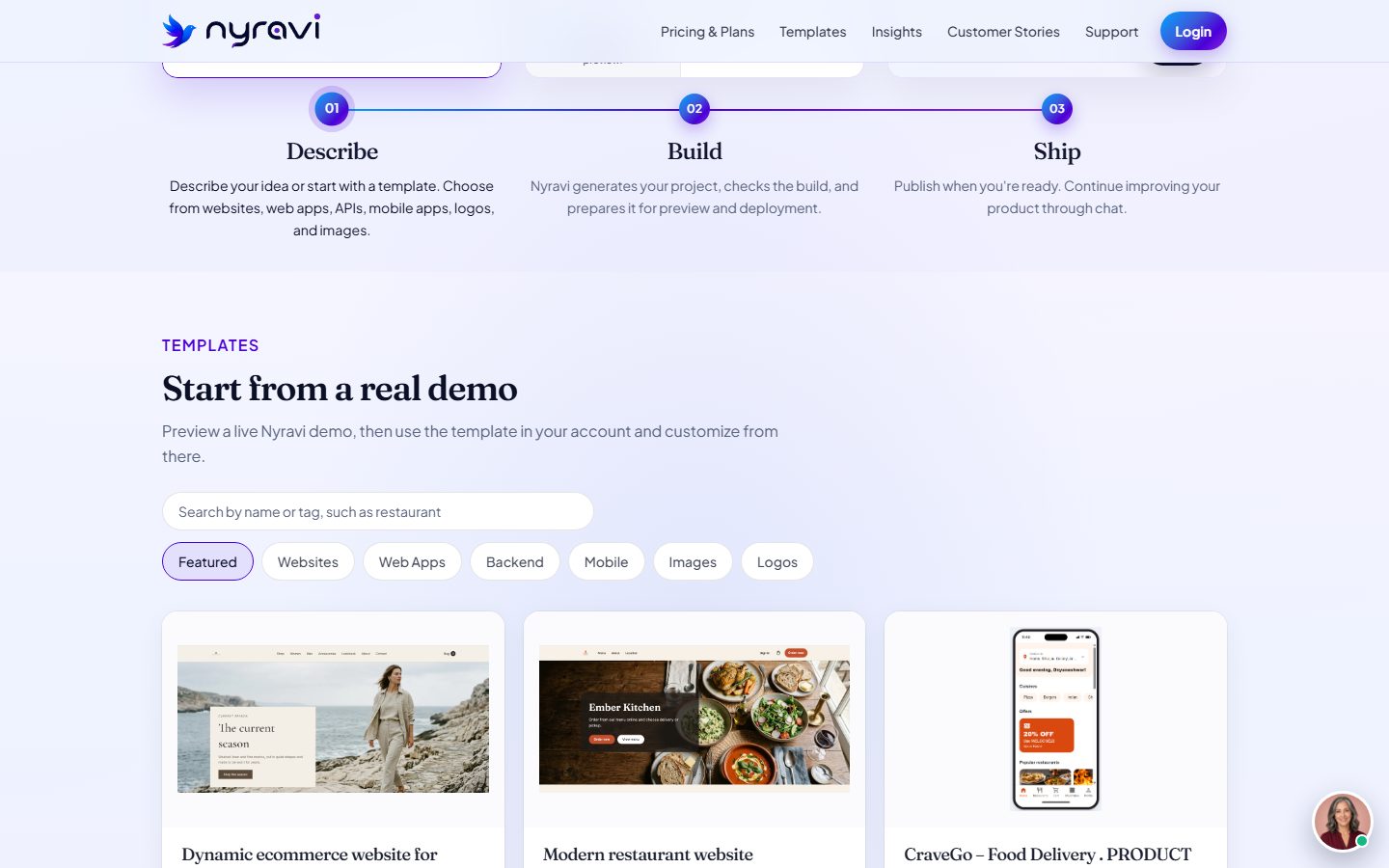
Open the AI app generator or the AI web app builder and describe the screens: retailer orders, batch and expiry register, stock by age, and receivables with reminders.
Where a mobile app helps
A mobile app suits the sales executive and the van driver who need the day’s route, retailer order history, stock on the van, a quick order entry, a payment collection note, and a photo of the shelf. Build it after your paper route sheet works for three months. A consumer app is rarely worth it for a single namkeen brand. Start from the AI mobile app builder.
Where a logo and brand mark help
A namkeen mark appears on the front of a pouch, a carton, a van, a retailer display tray, a gift box, and a WhatsApp profile, so it should read on a shelf from two metres away and at thumbnail size. Choose a short, easy-to-say name, a bold mark in a few colours, and a pouch front that tells the shopper what is inside in one glance. Use the AI logo generator to explore marks, and test each on a pouch front and a small circle before you print.
A ninety-day plan if you are starting
- 1
Days 1 to 15
Study three local brands as a shopper and as a retailer, pick two hero products and one route, cost every ingredient, and write your start-up and fixed-cost sheet.
- 2
Days 16 to 45
Secure premises, start FSSAI and other licences, buy or rent machines against written quotes, fix recipes and batch cards, run shelf-life trials, and finalise a pouch and label with a printer.
- 3
Days 46 to 70
Hire and train the first team, run trial batches, record yield and cost, set trade prices and a price list, and visit 40 retailers with samples.
- 4
Days 71 to 90
Begin regular supply, measure sell-through, returns, yield, and receivables, collect feedback, and fix the three biggest gaps before you add products or routes.
A ninety-day plan if you already operate
- 1
Days 1 to 15
Measure honestly: cost per saleable kg, yield loss, returns by product and route, receivable days, and your top three complaints.
- 2
Days 16 to 45
Cut the slowest product, tighten recipe cards and cooling and packing steps, fix the route with the most returns, and write one price list.
- 3
Days 46 to 70
Shift a share of volume to direct retailers and your own channel, introduce automated reminders and reorder messages, and plan the festive calendar and cash.
- 4
Days 71 to 90
Lock the weekly scoreboard and plan the next two seasons. Only then consider a new product, a new route, or a larger packing line.
Common failure patterns
- Buying machines before testing recipes, shelf life, and a pouch with real retailers
- A range of 40 products that multiplies stock, waste, and returns
- Pricing from the big brand’s MRP without working back through trade margins
- Silent weight cuts when oil or besan prices rise, which retailers notice faster than you think
- Frying oil reused beyond what the quality rules allow, or poor cooling that traps moisture in the pack
- No batch codes, so a single complaint cannot be traced and one bad batch spoils a route
- Giving long credit to distributors and retailers without ageing the receivables
- Printing health or ‘no preservative’ claims that the label rules or tests do not support
- Adding a second unit or a modern-trade listing before the first runs without the owner at the fryer
When you are ready to build with Nyravi
Use this guide to decide what the business needs. When the next step is a brand website with orders, a batch and receivables dashboard, a sales-rep route app, or a brand mark for your pouch and cartons, open Nyravi and describe that product. Keep the brief short: who uses it, what they open first, and what they finish.
If you want help writing that description, ask on Support. Start on the [home page](/), or jump to the product pages linked above. For WhatsApp chatbots, start at cognitivesys.io. The operation comes first. The build carries the system once the system is clear.
Questions
What is a namkeen and farsan business?+
A namkeen and farsan business is a food manufacturing-and-retail business that makes fried, roasted, or baked savory snacks such as sev, bhujia, mixture, gathiya, and chakli, and sells them packed or loose through retailers, distributors, its own counter, and online. It earns the margin between batch cost and the net price paid after trade margins, and is limited by capacity and shelf life.
How do I start a namkeen business in India?+
Start by choosing two hero products and one route, cost every ingredient, and write recipe and batch cards. Secure licensed premises, apply for FSSAI and other registrations, buy machines against written quotes, run shelf-life trials, design a compliant pouch and label, hire a small trained team, and visit your first 40 retailers with fresh samples.
How much does it cost to start a namkeen manufacturing unit?+
A small packed-namkeen unit can cost roughly ₹10 lakh to ₹30 lakh depending on city, machinery, and packaging. The worked example in this guide totals ₹20,10,000, including ₹6,00,000 of machinery, ₹1,20,000 of printed packaging, and ₹6,00,000 of working capital. A home kitchen or a counter-only start costs far less but earns less volume.
How much profit does a namkeen business make?+
Profit depends on packs sold, route mix, and cost per saleable kilogram, not on the MRP alone. In this guide’s example, a 200 g pack costs ₹26.26 and earns about ₹21.47 blended contribution, so ₹3,20,000 of fixed cost breaks even at about 14,905 packs and 25,000 packs earn about ₹2,16,750 a month after the owner’s draw.
What licences do I need to start a namkeen business in India?+
Most namkeen makers need an FSSAI registration or licence, GST where applicable, a local trade or factory registration, and a pack that follows FSSAI labelling and Legal Metrology rules. Pollution-control consent, fire safety clearance, plastic-packaging obligations, and a trademark may apply too. Rules vary by state and scale, so confirm with the authority and a qualified adviser.
How do I price namkeen packs for distributors and retailers?+
Work backwards from the net retail price through the retailer and distributor margins, then compare the result with your pack cost. In this guide’s example, a ₹60 net pack with a 20% retailer margin and an 8% distributor margin gives ₹44.16 net realisation against a ₹26.26 pack cost. Re-cost each quarter, since besan, oil, and packaging prices move.
How do I market a namkeen brand in India?+
Win retailers first with fresh samples, a fair margin, a tidy display, and a clear shelf-life promise, then build shopper trust with a readable pouch, a Google profile, and festive gift boxes booked early. Add a WhatsApp catalogue for trade buyers, tie up with sweet shops and caterers, and track the route of every order so you spend only on channels that bring profitable packs.
How can I improve my namkeen business?+
Cut your range to the products that sell, tighten recipe cards and cooling and packing steps, and track yield loss, returns, and receivable days every week. Trace every complaint to a batch, shift volume to better-margin routes, plan the festive cash a quarter ahead, and fix the complaint that appears twice before adding new products or routes.
Can a WhatsApp chatbot help a namkeen business?+
Yes, a WhatsApp chatbot can answer product, price, scheme, and delivery questions, take repeat retailer orders, collect gifting and bulk enquiries, send invoices and payment reminders, and ask for feedback, while handing complaints, returns, and allergen questions to a person. CognitiveSys, the parent company behind Nyravi, builds WhatsApp chatbots and shared inboxes. Start at cognitivesys.io.
Does a namkeen business need a website, an app, or Nyravi?+
A namkeen brand benefits most from a simple website with products, prices, ingredient information, and a trade enquiry form, then from a web app once orders, batches, and receivables outgrow a spreadsheet. A sales-rep mobile app helps after the paper route sheet works. Nyravi can build the website, dashboard, route app, or logo from a plain-language description. For WhatsApp chatbots, start at cognitivesys.io.