

Property management for landlords & societies
Property management business: how to start, run, and improve one
A practical operator playbook for people who manage rented homes, shops, and offices for landlords, NRI owners, and housing societies in India. Covers choosing a portfolio model, management-fee and leasing-fee pricing, owner agreements, tenant screening and documentation, rent and maintenance-due collection, move-in and move-out inspections, repair vendors and tickets, society accounts and committee reporting, vacancy and arrears maths, WhatsApp chatbots for tenant requests and owner updates, and when a website, property web app, tenant mobile app, or logo actually helps. Business operations only, not legal, tax, or tenancy-law advice.
 Nyravi AILearn playbookFirst-time property managers, existing landlord-services firms, society and RWA managers, and brokers who want recurring management income instead of one-off commissions
Who this guide is for
Read this if you manage a handful of flats for friends and relatives and want to turn it into a business, or if you already run a property-management firm and your month is a blur of rent chasing, plumber calls, owner complaints, and a society committee that wants a report you built the night before. It is also for brokers who are tired of earning once per deal and want a steady monthly income from the same owners.
The playbook is about the business of looking after other people’s property: owner contracts, tenant onboarding, rent and dues, repairs, reporting, and cash. It is not a guide to buying, selling, or brokering property, which sits in the realtor business and luxury real estate playbooks. Student housing is covered in the PG and hostel guide, and building-wide commercial services are in the facility management guide.
What a property management business is
A property management business looks after rented or society-owned property on behalf of the owner: finding and screening tenants, collecting rent and dues, handling repairs and complaints, keeping records, and reporting to the owner or committee. It earns a monthly management fee, usually a share of rent or a fixed amount per unit, plus leasing fees, renewal fees, and service margins.
The terms you will use every day
- Landlord or owner: the person or entity that owns the property and pays your fee
- Tenant: the person or business that occupies the property and pays rent
- Management fee: the recurring charge, often a percentage of monthly rent or a fixed per-unit amount
- Leasing fee: a one-time charge for finding and onboarding a tenant, often a fraction or a full month’s rent
- Security deposit: money held against damage or dues, handled strictly per the agreement and rules
- Move-in and move-out inspection: a written and photographed record of the property’s condition at each end of a tenancy
- Arrears and collection efficiency: unpaid rent or dues, and the share collected on time
- RWA or society committee: the elected body that manages common areas, maintenance dues, and vendors in a housing society
A property manager is not a broker and not a caretaker. The broker sells a moment. The manager sells peace of mind every month: rent on time, a tenant who stays, repairs done fairly, and no surprise calls to an owner living abroad.
What a property manager really sells
A property manager sells the owner’s time and the tenant’s comfort. An owner pays to stop thinking about the flat. A tenant stays when a leak is fixed within two days and the rent receipt arrives without asking. A society committee pays to be spared from vendor disputes, defaulter lists, and angry residents in the lift lobby.
That is why the best managers sell outcomes: collected rent, low vacancy, honest repair bills, and clean reports. A manager who is cheap but silent loses the owner. A manager who is clear, documented, and reachable keeps the owner for a decade and gets the next flat by referral.
Choose a portfolio model you can run well
You can manage individual flats for owners, whole buildings, commercial units, NRI portfolios, or entire societies. Each has a different fee, workload, and risk. An NRI owner with three flats wants updates and discipline. A society wants committee reports, vendors, and dues collection. A commercial landlord wants lease compliance and on-time rent from businesses.
Decide these before you pitch owners
- Which property types will you take first: residential flats, villas, shops and offices, or society management?
- Will you serve local owners, NRI owners, investors with several units, or housing societies?
- Which services are included in the fee: tenant search, rent collection, repairs, inspections, renewals, and statements?
- What is your minimum portfolio size per owner, and what do you charge for single units?
- Will you employ caretakers and technicians, or work through vetted vendors with commissions?
- How far from your office will you manage, given how often you must visit?
- What is your policy on handling deposits and who holds the money?
Owner agreements and onboarding
The management agreement protects both sides. It defines what you will do, what you will not, what you can spend without approval, how and when you pay the owner, and how either side can end the arrangement. Vague promises cause most owner disputes.
What to cover in an owner agreement
- Property details, ownership documents verified, and the owner’s authorised contact and bank account
- Services included, services charged extra, and response times for repairs and emergencies
- Management fee, leasing fee, renewal fee, and any markup on repairs, stated plainly
- Spending limit you can approve without calling the owner, and how emergencies are handled
- Rent collection method, deduction rules, and the date and format of the owner’s monthly statement
- Security deposit handling, interest rules if any, and refund process at move-out
- Term, renewal, notice period, and what happens to keys, records, and tenant communications on exit
- Insurance, liability limits, and the owner’s obligations such as paying property tax and society dues
Owner onboarding checklist
- Walk through the property with the owner and photograph every room, meter, and fixture
- List existing tenants, rent, deposit, agreement dates, and any dues carried forward
- Collect copies of ownership proof, society NOC if needed, utility bills, and keys
- Set up a dedicated property record with a repair history and recurring maintenance schedule
- Agree on a communication rhythm: a monthly statement, urgent calls, and a WhatsApp number for non-urgent updates
The numbers: fees, margin, and break-even
Property management looks like easy recurring revenue until you count the cost of visits, calls, vendors, staff, and the months a flat sits vacant. A small fee on a low rent can lose money once a plumber visit and two owner calls are counted.
Finding and screening tenants
A good tenant is the cheapest repair you will never need. Screening protects the owner and your reputation. Rushing to fill a flat with the first caller often costs a month of arrears and a deposit dispute.
A screening routine that protects the owner
- Collect identity, address proof, employment or business details, and references from every adult occupant
- Verify documents and employers by phone, and follow your state’s tenant verification process where required
- Meet the tenant in person or by video and confirm family size, pets, and intended use
- Check rent-to-income comfort, for example rent below roughly 35% to 40% of verified monthly income, as a guide not a rule
- Explain house rules, notice periods, and maintenance responsibilities before the agreement is signed
- Take the deposit and first month’s rent through traceable payment, and issue a receipt
- Register or stamp the agreement as required and give each side a signed copy
Rent and dues collection
Collection is the heartbeat of the business. An owner forgives a slow repair but not slow rent. A clear schedule, easy payment options, and early reminders solve most delays without confrontation.
A collection routine that works
- Send a rent reminder five days before the due date with payment details and a link or UPI option
- Offer standing instructions or auto-debit where tenants can use them
- Send a polite follow-up on the day after the due date and a call on day three
- Escalate to a written notice per the agreement after a defined period, and inform the owner at each step
- Issue a receipt on every payment and update the owner’s statement the same day
- Pay the owner on a fixed date after deducting only agreed fees, with a clear statement
- Keep deposit funds identifiable and handled exactly as the agreement says
Repairs, vendors, and maintenance
Repairs are where owners lose trust. A ₹3,000 job that becomes ₹7,000 without a quote, or a leak that takes two weeks to fix, ends the relationship. Fair prices, written approvals, and fast response matter more than the cheapest vendor.
Vendor and repair rules that protect trust
- Build a panel of vetted plumbers, electricians, carpenters, painters, and pest-control vendors with agreed rate cards
- Get two quotes for any job above the owner’s approval limit, and share them in writing
- Log every request as a ticket with a reference number, priority, photos, and a target completion time
- Inspect the work before paying, and photograph the result
- State any markup or commission on repairs openly in the owner agreement, or do not take one
- Schedule preventive maintenance such as water-tank cleaning, AC servicing, and pest control, and remind owners in advance
- Keep a repair history per property so patterns such as recurring damp can be fixed at the root
Move-in and move-out inspections
Most deposit disputes come from missing evidence. A dated, photographed condition report at move-in and move-out turns an argument into a comparison. It also protects honest tenants from unfair deductions.
Inspection checklist
- Walls, ceilings, floors, doors, windows, and fixtures, with photos and notes
- Meter readings for electricity, water, and gas, with the date
- Appliances and furnishings listed with condition, and inventory signed by the tenant
- Keys, remotes, access cards, and parking passes counted and recorded
- Move-out comparison with normal wear and tear separated from damage
- Itemised deduction list with quotes or invoices shared before any money is held back
- Deposit refund processed within the time stated in the agreement
Managing housing societies and RWAs
Societies are different from individual owners. The client is a committee that changes, the money is collective, and the residents are many. A society manager earns a fixed monthly fee or per-flat charge for running the day-to-day: dues collection, vendor management, accounts, notices, and reports.
What society management typically covers
- Monthly maintenance billing, receipts, and defaulter follow-up
- Vendor contracts for security, housekeeping, lifts, water, power backup, and landscaping, with renewal dates tracked
- Resident complaint ticketing with response and closure times
- Monthly accounts, bank reconciliation, sinking fund and reserve tracking, and audit support
- Notices, meeting minutes, and AGM preparation for the committee
- Common-area inspections and preventive maintenance schedules
- Move-in and move-out processes for residents, including deposits and no-dues certificates
The team
A property-management firm is a small service organisation. The owner wins clients and sets standards. Property executives run the portfolio. Vendors do the physical work. When the roles blur, owners get late statements and tenants get slow repairs.
Roles that keep a property-management firm steady
- Owner or director: client relationships, fee policy, vendor panel, cash control, and the monthly review
- Property executives: a defined portfolio each, visits, inspections, ticket follow-up, and tenant contact
- Leasing coordinator: listings, viewings, screening, and agreements for vacant units
- Accounts executive: rent reconciliation, owner statements, society billing, and payables
- Maintenance coordinator: vendor scheduling, quotes, quality checks, and preventive maintenance calendar
- Society manager or site supervisor: on-site presence for larger society contracts
A simple daily and weekly operating rhythm
Run the business on a short scoreboard
- Daily: new tickets triaged, vendor visits confirmed, rent received and receipted, and urgent owner or tenant calls cleared
- Twice weekly: reminders sent for upcoming rent, vacant-unit viewings scheduled, and open quotes followed up
- Weekly: collection efficiency, vacancy list, open tickets by age, new owner leads, and cash position
- Monthly: owner statements sent by the 10th, society reports, profit per unit, vendor performance, and arrears review
- Quarterly: agreement renewals due, portfolio mix, fee review, and vendor rate review
Money: the numbers that decide survival
Watch these every week
- Collection efficiency by property and by tenant
- Vacancy days per unit, and the cost of each vacant month to the owner and to you
- Open tickets by age, and the average time to close
- Net fee income per unit after cost to serve
- Owner churn: owners lost in the last 12 months and the reason
- Cash held for owners and cash belonging to the firm, kept strictly separate
ROI formulas you can use this month
Local marketing that brings owners
Owners rarely search for a manager until they move, retire, or tire of tenant calls. Marketing therefore needs to be visible where owners already look: neighbours, brokers, accountants, and Google searches such as “property management near me” or “NRI flat management”.
Channels that usually pay for a property-management firm
- Google Business Profile with service area, services, real photos, and replies to every review
- A short site with packages for flats, NRI owners, and societies, a sample owner statement, and a booking link for a call
- Referral arrangements with brokers, chartered accountants, lawyers, and interior designers who meet owners
- NRI community groups and associations in your city, with a clear remote-owner service promise
- Society committee presentations with a sample report, response-time promise, and references
- Seasonal outreach before tenant transfers, school admissions, and festival months
- Owner referral rewards, such as a fee discount for a recommended owner who signs
Reviews and reputation
Owners read reviews to see whether the manager was honest with money and responsive with problems. Tenants write reviews about repair speed and deposit refunds. Reply with facts, and treat a deposit complaint as a chance to show your documentation.
Automation that frees the owner
Automate these first
- Rent reminders, receipts, and overdue follow-ups with a clear payment link or details
- Maintenance request intake with photos, priority, and a ticket number
- Owner statements generated from collected rent and approved expenses on a fixed date
- Vacancy alerts and viewing slot confirmations with reminders
- Agreement and renewal alerts 60, 30, and 10 days before expiry
- Daily summary of tickets, collections, and arrears sent to the manager
Where a WhatsApp chatbot helps
Tenants and owners already message: “When is rent due?”, “The tap is leaking”, “Can I see the flat tomorrow?”, “Has this month’s rent come?”. When these land on a property executive’s personal phone, requests are missed, answers are inconsistent, and owners feel unheard.
What a business WhatsApp chatbot is good for
- Answering rent dates, payment methods, house rules, and service charges from facts you approve
- Logging repair requests with unit, issue, photos, and urgency, and sending a ticket number
- Booking viewings for vacant units and sending reminders to both sides
- Sending rent reminders, receipts, renewal notices, and owner statement notifications
- Handing the full thread to a human for disputes, deposits, legal notices, and complaints
Why property managers use it
- Tenants and owners already live on WhatsApp, so there is no extra app to install
- One shared inbox instead of each executive’s personal phone
- Fewer repeat calls during site visits and viewings
- Faster first replies on repairs and enquiries, which is where trust is won
Use WhatsApp for conversation. Use your website for service packages and a call booking. Use a web app when properties, tenants, tickets, and statements outgrow spreadsheets. See also the realtor, PG and hostel, and home service playbooks for neighbouring ideas on listings, tenants, and repairs.
Growing the portfolio
Growth comes from more units per catchment, larger owners, society contracts, and add-on services. The risk is the same as in any service business: service slips when portfolios grow faster than staff and systems.
Ways to grow responsibly
- Cap executive portfolios and hire before service quality drops
- Win larger owners and builders with five or more units, whose fee per visit is higher
- Offer add-ons such as interiors refresh, deep cleaning, and insurance referrals, with clear margins
- Standardise owner statements, tickets, and inspection reports across the portfolio
- Add a society contract only when you have a supervisor and the working capital to carry slow payment
- Keep a cash reserve equal to at least three months of fixed costs
Where a website helps
A property-management website should answer the owner’s first questions: what do you manage, what does it cost, how do I get paid, and who will I talk to. Clear packages, a sample monthly statement, areas covered, testimonials, and a visible WhatsApp number turn a search into a call.
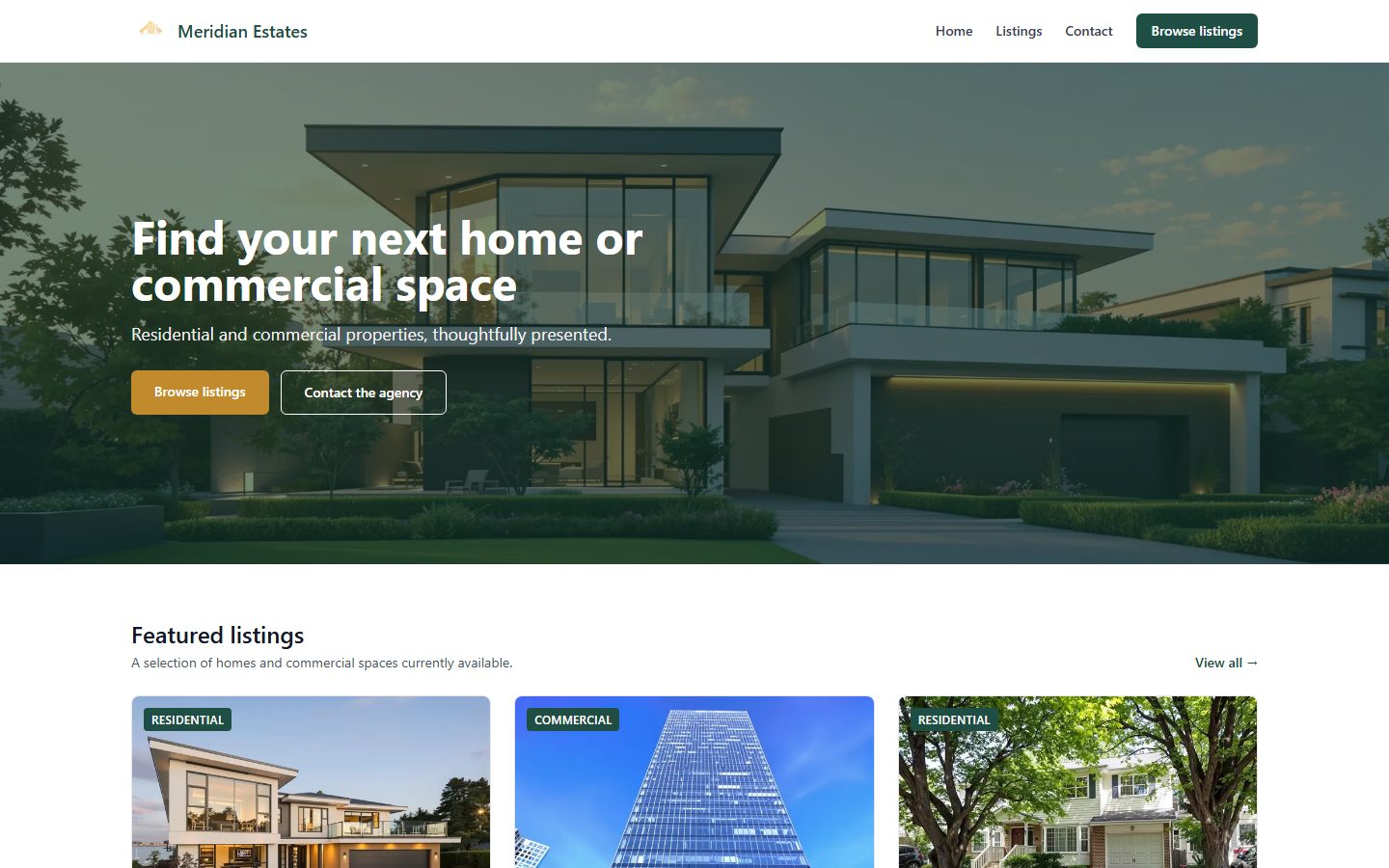
When you are ready to publish, start from the AI website builder or build a website with AI. Describe your packages, areas, and owner types.
Where a web app helps
A web app helps when you manage more than a few dozen units or any society. It can hold owners, properties, tenants, agreements and renewal dates, rent ledgers, tickets, vendors, inspection reports, statements, and the weekly scoreboard in one signed-in place, with owner and tenant views.
Use it once spreadsheets and chat groups start giving two answers about who paid or which repair is open. Open the AI app generator, the AI web app builder for owner portals and ticket boards, or the inventory app builder for keys, assets, and furnishing inventories.
Where a mobile app helps
A mobile app suits property executives who need a visit checklist with photos, a move-in and move-out inspection form with a signature, a ticket list for the day, and a quick rent-status look-up. Residents also benefit from a simple app for dues and complaints once the routine works. Start from the AI mobile app builder.
Where a logo and brand mark help
A property manager is trusted with keys and money, so a clean, professional mark matters on statements, agreements, visiting cards, uniforms, and vehicle stickers. When you need it, use the AI logo generator and keep it simple enough to read on a small letterhead.
A ninety-day plan if you are starting
- 1
Days 1 to 15
Choose your first catchment and owner type, draft your owner agreement with a lawyer, and build your own fee, cost-to-serve, and break-even sheet.
- 2
Days 16 to 45
Build a vendor panel with rate cards, set up a ticket and rent ledger system, write your inspection and screening checklists, and sign your first five owners.
- 3
Days 46 to 70
Run the first full rent cycle, send owner statements by the 10th, document every visit, and collect owner feedback.
- 4
Days 71 to 90
Track collection efficiency and ticket closure, ask for referrals, set a minimum fee per unit, and fix the biggest leak every week.
A ninety-day plan if you already operate
- 1
Days 1 to 15
Measure honestly: net fee per unit, cost to serve, collection efficiency, vacancy days, ticket age, and unanswered chats and calls.
- 2
Days 16 to 45
Fix the single biggest leak, usually low-fee units, slow tickets, or late statements, and reset fees or minimums at renewal.
- 3
Days 46 to 70
Add rent, ticket, and viewing messages, standardise the statement, and review vendor rates and markups openly.
- 4
Days 71 to 90
Lock the routine into a weekly scoreboard. Only then discuss a society contract, a second office, or new add-on services.
Common failure patterns
- Charging a percentage fee on low-rent units and losing money on every visit
- Mixing owner money with firm money, or holding deposits without clear records
- Skipping move-in photos and then arguing over deductions
- Placing the first applicant without screening
- Approving repairs without quotes or owner limits
- Taking a society contract without staff, systems, or working capital
- Sending owner statements late or with unexplained deductions
- Letting executives manage unlimited units until service collapses
- Letting WhatsApp and phone requests go unanswered while the team is on visits
When you are ready to build with Nyravi
Use this guide to decide what the business needs. When the next step is a packages-and-enquiry site, a properties-and-tickets web app, an executive inspection app, or a logo for statements and agreements, open Nyravi and describe that product. Keep the brief short: who uses it, what they open first, and what they finish.
If you want help writing that description, ask on Support. Start on the [home page](/), or jump to the product pages linked above. For WhatsApp chatbots, start at cognitivesys.io. The operation comes first. The build carries the system once the system is clear.
Questions
How do I start a property management business with limited capital?+
Start with a small catchment, a lawyer-reviewed owner agreement, a vetted vendor panel, and a simple rent and ticket ledger. Budget around ₹5,00,000 to ₹7,00,000 for setup and six months of working capital, sign your first five owners from your network, and set a minimum fee per unit so small flats do not run at a loss.
How much do property managers charge?+
Many managers charge a monthly fee of roughly 5% to 10% of rent or a fixed amount per unit, plus a leasing fee for finding a tenant and sometimes a renewal fee. Fees vary by city and service, so calculate your cost to serve per unit first. For example, ₹1,417 of monthly cost per unit means a ₹12,000 flat at 7% (₹840) loses money.
How do I collect rent on time as a property manager?+
Send a reminder five days before the due date with a payment link, follow up the day after and by call on day three, and issue a receipt on every payment. Offer auto-debit or standing instructions, and pay the owner on a fixed date with a clear statement. A collection efficiency of 95% or more is a good target.
How do I manage a housing society as a business?+
Take a fixed monthly fee covering dues billing, vendor management, accounts, complaint tickets, and committee reports, and keep a supervisor on site. Check that the contract margin, for example about 21% on a ₹65,000 monthly fee, survives one unpaid month, and never take a society contract without working capital.
What should an owner agreement include?+
Include property and ownership details, services and extra charges, all fees, the spending limit you can approve, rent and statement dates, deposit handling, term, notice period, and exit terms. Have a lawyer review it, since rules on registration, deposits, and tenancy differ by state.
Should a property manager use a WhatsApp chatbot?+
Yes for repeat requests such as rent dates, repair tickets, viewing bookings, and renewal reminders. A CognitiveSys WhatsApp chatbot answers from facts you approve, logs tickets with photos, and lets staff take over any thread, especially deposits and disputes. Start at cognitivesys.io.
Is this guide legal, tax, or tenancy-law advice?+
No. It covers business operations only. Rent agreements, stamp duty, registration, police verification, tenant rights, society bye-laws, GST, and TDS on rent differ by state and situation, so confirm them with a lawyer, chartered accountant, and the relevant authorities.
How can I improve profit in a property management business?+
Set a minimum fee per unit, cap each executive’s portfolio, cut average vacancy days, raise collection efficiency, and automate statements and reminders. Track net fee per unit after cost to serve, and win larger owners with several units in the same catchment.
When does a property manager need a web app instead of a website?+
When you manage dozens of units or a society and need rent ledgers, tickets, agreements, inspections, and owner statements in one place. A website helps owners find and contact you. A web app runs the portfolio, with portals for owners and tenants.
Can Nyravi help after I read this guide?+
Yes. When you know whether you need a packages-and-enquiry website, a properties-and-tickets web app, an inspection mobile app, or a logo, open Nyravi and describe that product. Support can help you shape the brief. For WhatsApp chatbots, start at cognitivesys.io.