

School bus transport
School bus transport business: how to start, run, and improve a student transport fleet
A practical operator playbook for starting, running, and improving a school bus and student transport business in India: what the business really sells (a parent’s trust at 7 am), seat-fill, route, fee-slab, break-even and payback formulas with checked ₹ examples for a 12-bus fleet, school-contract versus parent-direct models, permit, fitness, insurance and child-safety requirements to confirm with your RTO and school, driver and attendant systems, pre-trip and hand-over checklists, weekly scoreboards, fee collection, WhatsApp chatbots for parent updates and enquiries, and when a website, route and fee web app, driver mobile app, or logo actually helps. Business operations only, not safety, legal, or regulatory advice.
 Nyravi AILearn playbookFirst-time school bus operators, owner-drivers who want to grow from one vehicle to a fleet, transport contractors bidding for school contracts, school administrators who run in-house transport, taxi and tempo-traveller owners adding student routes, and existing fleets that want fuller seats, cleaner compliance, faster fee collection, and calmer parents
Who this guide is for
Read this if you want to open or run a school bus or student transport business that takes children to and from school on fixed morning and afternoon routes, either under a contract with one or more schools or on a monthly fee paid by parents. It is also for an owner-driver with one or two vehicles who wants to build a fleet, a taxi or tempo-traveller owner who wants steady daily income, a transport manager who has just been handed a school’s buses, and an operator whose buses run full in July and half empty by December. If your vehicles are fine but your seats, fee collection, or parent complaints are not, this playbook is for you.
The playbook covers the business around the buses: seat-fill, routes, fees, compliance calendar, staff, cash cycle, and parent communication. If you rent vehicles to customers on a trip or daily basis, read the car rental guide. If you run cabs for on-demand rides, see taxi fleet. If you move goods, the logistics guide fits better. If you run tours, read travel agency. A school bus business is judged on one thing first: every child reaches school and home safely and on time, every day, with a record to prove it.
What a school bus transport business is
A school bus transport business operates buses, vans, or minibuses that carry students between home, or a pick-up point, and school on scheduled routes, with a trained driver and an attendant, and bills either the school or the parents. Revenue comes from paid seats multiplied by the monthly fee, over the months the school year runs. Cost keeps running when the school is closed. The business earns when seats are full, routes are tight, fees are collected on time, and no day is lost to a breakdown or a compliance gap.
Terms you will use every week
- Route: a fixed sequence of pick-up and drop points with timings, planned so no child rides too long
- Run: one trip on a route, such as the first morning run to school or the second afternoon run home
- Tiering: using one bus for two staggered runs, for example 7:00 am to one school and 8:15 am to another
- Registered seating capacity: the number of seats the vehicle is permitted to carry, which you never exceed
- Paid seat: a seat for which a fee is billed, counted per child per month
- Seat-fill: paid students on a run divided by registered seats
- Dead kilometres: kilometres driven with no child on board, such as the depot to the first stop
- Fee slab: a monthly fee tied to a distance band, such as 0–5 km, 5–10 km, and 10–15 km
- Collection rate: the share of billed fees that actually arrive within the due window
- Fitness certificate, permit, and PUC: the vehicle papers that must be current for the bus to run
A school bus business is closer to a safety-critical service than to a general transport business. The cost sheet is normal. The tolerance for a missed check, an untrained driver, or an unlocked door is not.
School bus fleet at a glance: the worked example in this guide
Key figures, all illustrative and to be replaced with your own quotes and fee data
- Fleet: 12 buses of 35 registered seats, each doing two staggered morning runs and two afternoon runs
- Seat-fill: about 26 paid students per run, so 52 paid students per bus and 624 across the fleet
- Fee: a blended ₹2,400 per student per month, billed for 10 school months, with 4% leakage from concessions and bad debt
- Variable cost: about ₹40,500 per bus per school month for diesel, maintenance, and tyres
- Fixed cost: about ₹6,08,000 a month for 12 months, including drivers, attendants, loan instalments, compliance, depot, and a ₹40,000 owner draw
- Contribution: about ₹79,308 per bus per school month, or ₹9,51,696 for the fleet
- Break-even: about 528 paid students, which is 44 per bus, against a plan of 52
- Profit: about ₹22,20,960 a year on cash basis before a fleet renewal reserve, and about ₹15,20,960 after one
- Start-up investment: about ₹98,00,000, which pays back in about 53 months on cash profit
Treat these as a template for your own sheet, not as a promise. Fees, diesel price, bus cost, wages, and fill vary by city, distance, and school. The point is to see which numbers move profit most: paid seats per bus, fee collected, and the fixed cost that continues in the months the school is closed.
What a school bus business really sells
A parent does not buy a seat. A parent buys the confidence that a child who leaves the gate at 6:50 am will be handed to a known adult at school and, in the afternoon, to a known adult at home. The school buys fewer parent calls and a transport desk that does not become the principal’s problem. The operator earns the first contract with a clean record. A clean record earns the next ten.
Many new operators compete on price per seat and lose on the first breakdown, the first late arrival, or the first unexplained change of driver. An operator who is known for punctuality, a verified and trained crew, a visible compliance file, and a parent who can always find out where the bus is has more freedom to price, and a far lower rate of cancelled seats. Trust is the product.
How a school bus business differs from car rental, taxi fleets, logistics, and tours
Operators often borrow numbers from a taxi or rental business and get the wrong sheet. A school bus business is a contracted, scheduled, term-bound service with children on board and a heavy compliance load. That changes the permits you hold, the staff you hire, the fees you set, and the numbers you track.
Where the lines fall
- Car rental: vehicles hired out to customers by the day or trip, with no fixed route. See car rental for utilisation and deposit economics
- Taxi fleet: on-demand cab rides or driver-leased cars, with demand that changes hour to hour. See taxi fleet for that model
- Logistics: goods, not people, with load and delivery-time metrics. See logistics for freight economics
- Travel agency and tours: packages and bookings, with trips that happen occasionally. See travel agency and pilgrimage tours for that model
- Preschool and daycare transport: a smaller van service attached to a centre. See preschool and daycare for how those parents think
- Ambulance and medical transport: a different licence and response model. See ambulance service if patients, not students, are your passengers
Choose a contract model and a vehicle type before you buy a bus
A school bus business can be built in several ways, and the model decides the cash cycle, the risk, and the margin. Pick the model that matches the schools you can reach and the capital you have, and treat every other model as a later step.
Common models and what each asks of you
- School contract: the school hires your buses at a monthly rate per bus or per route. Cash is predictable and fee chasing is the school’s job, but the rate is negotiated and renewals can be competitive or tender-based
- Parent-direct: parents pay you monthly, usually with the school’s permission to use its gate and timings. Margin per seat is higher, and so are collection work and parent communication
- School-owned, operator-managed: the school owns the buses and you supply drivers, attendants, maintenance, and compliance for a fee. Capital is low and the margin is thin and steady
- Attached vehicles: owner-drivers run their own buses under your contract and standards. Growth is fast, and so is the risk of uneven quality, so inspections and documents must be strict
- Mixed with charter: school routes in term time and excursion, staff, or wedding trips outside school hours, where the vehicle permit and the school’s rules allow it
Decide these before you commit money
- Which schools and which corridor, and whether each has a transport policy that names approved operators
- Vehicle type for each route: a full bus, a minibus, or a van, matched to road width, route length, and the number of children
- New or pre-owned buses, with the age limit your state and school allow, and a written fitness history for any used bus
- Whether you will tier routes, and whether school timings allow a second run without making a child ride too long
- Which accessibility needs, such as a ramp or lift, the school expects you to serve
- Scale for the first year: two buses on one school, six buses on two schools, or a twelve-bus corridor fleet
How a school bus day works, from the depot to the last drop
Every school bus day follows the same shape: inspect the vehicle, brief the crew, run the morning routes in order, return, clean, run the afternoon routes, reconcile the roll, and log what happened. Details differ by school and route, so this is a map, not a rulebook.
A typical day on one bus
- 1
1. Pre-trip inspection
The driver checks tyres, brakes, lights, mirrors, doors, emergency exit, fire extinguisher, first-aid kit, seats, GPS, and CCTV, signs the checklist, and reports any defect before the bus leaves.
- 2
2. Crew briefing
Driver and attendant confirm the route sheet, the student list for the day, any new child or absent child, and any road or weather change.
- 3
3. Morning pick-up
The attendant meets each child at the stop, ticks the roll, and hands children only at approved points, with a head count after the last stop.
- 4
4. School drop and hand-over
The attendant hands the children to the school’s transport staff or at the gate, confirms the head count, and walks the bus to check no child is left on board.
- 5
5. Second run or return
Tiered buses start the second run on the same checks and the same roll discipline, and non-tiered buses return to the depot or a safe parking point.
- 6
6. Afternoon routes
Children are handed from school staff to the attendant by name, and are handed at home only to an authorised guardian at the stop, or as the school’s policy requires.
- 7
7. Close and clean
The bus is cleaned, refuelled, and parked, the day’s km, fuel, delays, and incidents are logged, and parents are told of any exception.
- 8
8. Review
The coordinator reads the log, calls any parent with an open complaint, and plans tomorrow’s route changes and leave cover.
Start-up and monthly cost formulas
A school bus business needs vehicles, safety equipment, permits and fitness, a depot, verified staff, and cash to cover the months before the first fees arrive. The buses are the large line. The working capital and the safety equipment are the two lines founders most often cut, and the two they most often regret.
Seat economics: what one bus earns
A bus pays for itself only if each seat earns a fee that exceeds the cost to carry it. Work out the revenue of one bus, the fuel and maintenance it burns, and the contribution left to cover the fixed cost, and run the fleet from those numbers rather than from a headcount you hoped for.
Break-even and profit: students, buses, and the months school is closed
Because drivers, instalments, insurance, and depot rent are paid in the two or three months the school is closed as well, the number of paid students you need through the school year is the most important number in the office. Put it on the wall where the coordinator can see it every day.
Permits, fitness, insurance, and child-safety requirements to confirm
A school bus touches vehicle law, driver licensing, insurance, school-board transport rules, labour law, tax law, and child protection. The framework differs by state, vehicle class, and school. Treat this section as a checklist of things to confirm with the authority, not as instructions.
Confirm each with the RTO, the school, your insurer, and a qualified adviser
- Registration of each vehicle in the correct class, and the permit type that allows it to carry students, including whether it may also be used for charter or staff trips
- Fitness certificate, pollution-under-control certificate, road tax, and insurance, each current and tracked on a renewal calendar for every bus
- School-bus colour, signage, and marking rules that your state or the school’s board requires, and any rule on vehicle age
- Speed limiter or governor, GPS tracking, CCTV, panic button, fire extinguishers, first-aid kit, emergency exit, and seat-belt rules that apply to your vehicle class and state
- Driver licence class and badge, minimum experience, medical and eye test, and police verification, and whether the school or the board requires a stricter standard
- Attendant or conductor rules, including whether a woman attendant is required and what training and verification are needed
- Insurance for passengers, third-party liability, and the vehicle, with the school’s required cover and policy limits written down
- Child-protection policy, awareness of the Protection of Children from Sexual Offences (POCSO) framework, and a written code of conduct for every crew member
- Contract wording with each school on liability, route changes, strike days, and termination, reviewed by a lawyer
- GST treatment of transport services and of any charter income, Udyam registration, and labour and provident fund rules, confirmed with a chartered accountant
Safety, hand-over, and incident systems
Safety in a school bus business is a routine, not a poster. The routine is a checklist signed before each trip, a head count at every stop, a walk-through after every run, and an incident log that is read by a person who can act. Write the routine down and audit it.
Systems worth writing down
- A pre-trip checklist for every bus, covering tyres, brakes, lights, doors, emergency exit, first-aid and fire kits, GPS, and CCTV, with a rule that a failed item means the bus does not run
- A student roll for every run, with the child’s name, stop, guardian contacts, and authorised hand-over persons, held by the attendant and the coordinator
- A hand-over rule that a child is released only to a person named on the authorised list, with a call to the coordinator when anyone else appears
- An end-of-run walk-through of every row to confirm that no child, bag, or lunch box is left on board, signed by the attendant
- A speed and driving-behaviour review from GPS data, with a conversation with the driver for repeated over-speed, harsh braking, or off-route stops
- A breakdown plan with a standby vehicle or a partner operator, and a rule for how quickly parents are told
- An incident register for delays, near misses, injuries, and complaints, with the cause and the fix, read by the owner every week
- An evacuation and first-aid drill each term, led with the school’s approval, so the crew and older students know what to do
- A crew code of conduct that covers phone use, language, photographs of students, and one-to-one contact with a child
The team a school bus business needs
A school bus business works when each person owns a task and a checklist. Hire for reliability and patience with children, verify every crew member, train each one on your rules, and keep a trained standby.
Roles that keep the buses safe and on time
- Owner or transport manager: school relationships, fees, compliance calendar, cash, and the weekly review
- Drivers: safe driving, the pre-trip check, route discipline, and calm handling of delays and traffic
- Attendants: boarding and hand-over, roll and head count, child conduct on board, and the end-of-run walk-through
- Route planner and dispatcher: route design, stop changes, tiering, standby cover, and daily schedule
- Parent coordinator: enquiries, new admissions, complaints, fee reminders, and school liaison
- Fleet supervisor or mechanic: preventive maintenance, parts, tyres, and a clean, safe depot
- Accounts: fee billing and reconciliation, fuel and repair bills, wages, GST, and renewals, often a part-time accountant
Pay drivers a base plus a visible bonus for clean attendance, no incident, and good GPS behaviour. A bonus on trips alone teaches people to rush, which costs far more than it saves.
Pricing, fee slabs, and the parent journey
A parent compares your fee with the neighbour’s van and the school’s own bus, and then pays for the one that feels safest and most predictable. Price by distance slab, show the slabs in writing, and state what the fee includes, what is billed in holidays, and what the notice period is.
A standard parent journey
- 1
1. Enquire
A parent asks about the route, timing, and fee, and gets a prompt, accurate reply with a slab and a stop list.
- 2
2. Check the route
The coordinator confirms the stop, the run, and the ride time, and says honestly if the route cannot be served.
- 3
3. Enrol
The parent signs the transport form with child details, authorised persons, medical notes, and emergency contacts, and pays the first fee or deposit.
- 4
4. Onboard
The parent receives the route sheet, the bus number, the driver’s and attendant’s names, the pick-up time, and the helpline.
- 5
5. Ride
The child boards with a roll check, and the parent gets an update when the bus is late or a stop changes.
- 6
6. Pay
A fee notice and reminder go out on a fixed schedule, with a clear policy for late payment.
- 7
7. Resolve
Complaints are logged, the cause is fixed, and the parent gets a call back within a day.
- 8
8. Renew
Before the next session, the coordinator confirms continuation, new addresses, and any change of stop.
A simple weekly rhythm
Run the fleet on a short scoreboard
- Daily morning: pre-trip checklists signed, crew present, standby ready, and the roll for any new or absent child
- Daily runs: on-time arrival at school, delays and their reasons, and any incident, read by the dispatcher by 9 am
- Daily close: fuel, km, parking, cleaning, defect reports, and tomorrow’s route changes
- Weekly: on-time %, paid students by bus and by school, seat-fill, complaints by cause, and GPS over-speed events
- Weekly: fees billed, fees collected, collection rate, receivables by school and by parent, and concessions given
- Weekly: a five-minute crew huddle on one thing, such as stop discipline or the end-of-run walk-through
- Monthly: compliance renewals due in the next 60 days, maintenance schedule, fuel cost per km, diesel price check, and a contract review with each school
Money: the numbers that decide survival
Watch these every week and every month
- Paid students, seat-fill, and revenue per bus by route and by school
- Cost per km, diesel per km, and maintenance per km, with a monthly check against the plan
- Collection rate and receivables by school and by parent, and days outstanding
- Cash in hand against three months of fixed cost, with the school holidays in mind
- Compliance and renewal costs in the next 90 days, so a fitness or insurance bill never surprises you
- Overtime and substitute crew costs, which grow quietly when attendance is poor
- Repair downtime in days, because a bus off the road is a route without a seat
ROI formulas you can use this month
Marketing a school bus business in India
School transport is sold on trust, proximity, and references. Marketing is mostly proof that you are verified, punctual, and easy to reach. A parent who sees a clean bus, a named driver, and a helpline that answers at 6:30 am needs very little else.
What moves enrolments
- A complete Google Business Profile with the depot address, photos of the buses, the areas you serve, and a phone and WhatsApp number that are answered
- A transport desk presence at the school’s admission and orientation days, with the school’s approval, and a one-page brochure with slabs
- Referral from current parents to neighbours on the same route, rewarded with a small fee credit
- Parent-group updates on route changes and new stops, sent only to guardians who have opted in
- A visible compliance page showing permits, driver verification practice, GPS and CCTV, and the safety checklist, without sharing any child’s data
- Open depot days before the session for parents to see the buses and meet the crew
- Honest claims only, with no “100% safe” or similar promises, and no use of any child’s photograph without written consent
Reviews, relationships, and reputation
A school bus operator is judged by parents who talk to each other and by a transport in-charge who talks to the principal. One late bus remembered for a week is normal. A late bus that nobody explained is remembered for a year.
A routine that works
- Call the school transport in-charge every month and ask what they would change in timing, behaviour, or communication
- Tag every complaint by cause: late bus, route change, driver conduct, attendant, cleanliness, safety concern, or fee dispute
- Fix the cause with the highest count first, tell the crew, and measure the same complaint next week
- Ask satisfied parents for a Google review only after a calm moment, never as a condition of any service
- Reply to every public review within 48 hours, thank the good ones, and offer a call to fix the bad ones
- Never discuss a child’s details in public, and never argue with a parent online
- Run a short survey once a term with three questions: punctuality, crew behaviour, and communication
Channels that bring seats and contracts
Rank them by margin per seat and by reliability, not by volume alone
- School contracts: a steady base with a negotiated per-bus or per-route rate and a payment cycle you can plan around
- Parent-direct subscriptions: higher margin per seat, with more collection and communication work
- Residential society and apartment routes: dense, predictable stops that cut dead kilometres
- Preschools, coaching centres, and activity classes: small runs that can fill a tiered gap, with their own timings and rules
- Corporate and staff shuttles: off-peak use of the same buses where the permit and school rules allow it
- Excursions, sports days, and event charters: occasional, higher-rate trips that need advance planning and separate paperwork
- Attached-vehicle partners: a way to grow route coverage when your own capital is limited, with strict standards
Log the source of every enrolment. After a term you will know which channel gives paid seats and which one gives only enquiries.
Automation that frees the owner
Automate these first
- A daily route sheet that lists each bus, driver, attendant, stops, and the student roll with absences marked
- Pre-trip checklist reminders and a missed-check alert to the supervisor
- Compliance renewal reminders for fitness, insurance, PUC, tax, and driver licence and medical dates, 60, 30, and 7 days ahead
- Fee notices, due-date reminders, and receipts, sent on a fixed schedule with a clear late-payment policy
- A delay or stop-change message to the guardians on one route, approved by the coordinator
- A GPS-based exception report for over-speed, off-route, and long idle events
- A weekly digest to the owner: on-time %, paid students, seat-fill, complaints, collection rate, and renewals due
Where a WhatsApp chatbot helps
Parents message early and late: “Is the bus late today?”, “What is the fee for Sector 12?”, “Can my child get off at a different stop on Friday?”, “Where is bus 7?” If those messages wait until the coordinator is at a desk, the parent calls the school, and the school calls you. A well-built chatbot gives routine answers fast and sends everything sensitive to a person.
What a business WhatsApp chatbot is good for
- Answering route, timing, fee-slab, admission, and documents questions from facts you approve
- Collecting new enquiries with area, school, class, and a guardian contact, then alerting the coordinator
- Sharing a delay or stop-change message with the guardians on a route, approved by a person
- Sending fee notices, reminders, and receipts, and recording who has paid
- Sharing a live-location link only with a registered guardian’s verified number, as your policy allows
- Collecting a leave or alternate-stop request and sending it to the coordinator for approval
- Asking for feedback after a term and routing complaints to a person
What it must never do
- Confirm a hand-over or release a child to anyone, or change an authorised person, over chat
- Share a child’s name, photo, address, location, or schedule with an unverified number
- Give safety assurances, accident details, or injury information beyond a message from a person
- Handle an emergency, a breakdown with children on board, or a complaint about conduct, which go straight to a person on a phone call
- Promise a seat, a route, or a fee exception that the coordinator has not approved

Use WhatsApp for conversation, your website for proof and a fee page, and a web app when routes, rolls, fees, and renewals need to live in one place.
Growing a school bus business
Growth is not only more buses. It is fuller seats, tighter routes, a cleaner compliance record, higher fee collection, and a name that schools put on a short list. Add capacity from profit rather than debt where you can.
Ways to grow responsibly
- Fill existing seats and tighten routes before you add a bus, because both lift profit without new capital
- Add schools in the same corridor to raise route density and cut dead kilometres
- Tier more routes where school timings allow, without making any child ride for too long
- Use idle hours and the holiday months for charter or staff shuttles where permits allow
- Move from cash-and-memory fee collection to a billing system with reminders
- Invest in preventive maintenance so fewer days are lost to breakdowns
- Evaluate electric or CNG buses against your routes and your local incentives, with a trial before a fleet decision
- Open a second corridor only after the first has held target seat-fill, on-time %, and collection rate for two terms
Where a website helps
Parents search “school bus service near me”, “school transport for [school name]”, or “school van for [area]” before they ring. Your website should show the schools and areas you serve, fee slabs, pick-up and drop timings, the safety practices you follow, your compliance and verification summary, an enquiry form, and a WhatsApp button, in that order. A site with only a logo and a phone number loses to the operator that answers the first three questions on one page. Add clear headings and structured data for a local business so search engines and AI assistants can quote your service area, hours, and contact details correctly.
Start from the AI website builder or build a website with AI and describe your schools, areas, fee slabs, safety practices, and the three questions you want a parent to answer on the page.
Where a web app helps
A web app helps when routes, student rolls, fees, vehicles, and renewals outgrow a notebook and a spreadsheet, and when a second corridor makes one person’s memory unreliable. A signed-in board that shows buses by route, students by stop, fees by due date, and renewals by expiry gives the owner, the coordinator, and the dispatcher the same answer. A guardian view can show the bus and driver names, timing, and fee status, with permission and security built in.
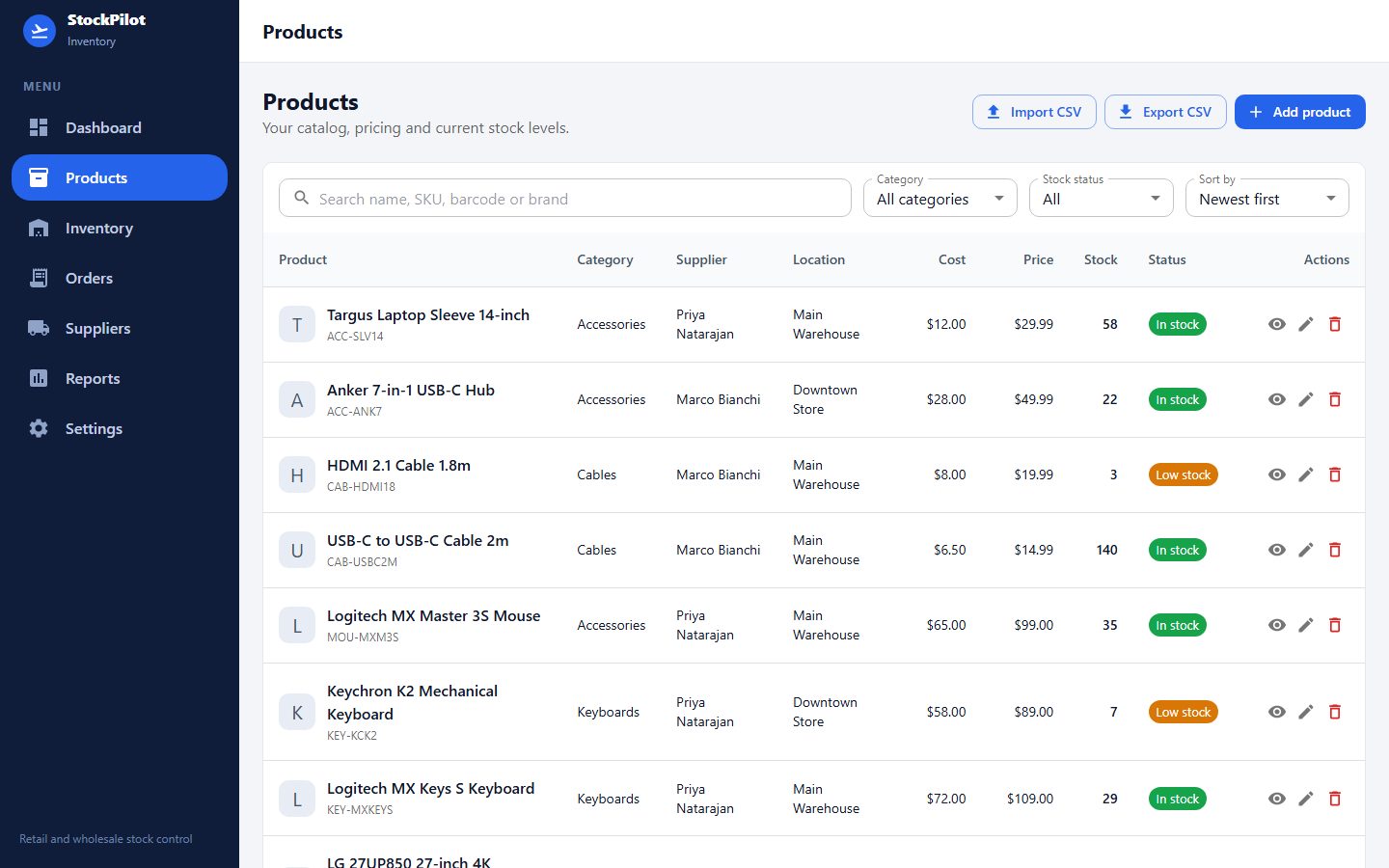
Open the AI app generator or the AI web app builder and describe the screens: route and stop register, student roll with authorised persons, fee billing and receipts, vehicle compliance calendar, and an incident and complaint log.
Where a mobile app helps
A mobile app suits the driver and attendant who need a pre-trip checklist, a student roll with board and drop ticks, a delay report, a photo of a defect, and an incident note, all from a phone on the road. Build it after your paper checklist has worked for a full term. A guardian app is rarely worth it for one operator, and a simple WhatsApp and web view often serves parents better. Start from the AI mobile app builder.
Where a logo and brand mark help
A school bus mark appears on the bus panel, the crew badge, the parent form, the receipt, a WhatsApp profile, and a school notice board, so it should read at a distance and in one colour. Pick a short name that is easy to say on a phone, a simple mark that suggests safety and care without copying a famous brand, and a badge design that parents can recognise at the stop. Use the AI logo generator to explore marks, and test each on a bus panel, a small badge, and a phone profile before you print.

A ninety-day plan if you are starting
- 1
Days 1 to 15
Speak with the RTO and two schools, learn the permit, vehicle, driver, and attendant requirements, pick one corridor, and cost buses, crew, insurance, and tracking.
- 2
Days 16 to 45
Secure a depot, apply for registrations and permits, buy or arrange the first three or four buses, verify and train the crew, and sign a written agreement with your first school.
- 3
Days 46 to 70
Plan routes with real timings, run dry runs without children, finalise the checklists and hand-over rules, and open enrolment with slabs and a parent helpline.
- 4
Days 71 to 90
Start the term, measure on-time %, seat-fill, and complaints daily, fix the three biggest gaps, and collect your first fees on a fixed schedule.
A ninety-day plan if you already run buses
- 1
Days 1 to 15
Measure honestly: seat-fill and revenue by bus, on-time %, complaints by cause, collection rate, compliance dates, and cost per km.
- 2
Days 16 to 45
Fix one leak: an empty route, a bus with repeated delays, a late-paying school, or an expiring paper. Rewrite the pre-trip and hand-over checklists.
- 3
Days 46 to 70
Re-cut routes to cut dead kilometres, tier where possible, set clear fee slabs and concession rules, and move fee notices and reminders to a fixed schedule.
- 4
Days 71 to 90
Lock the weekly scoreboard and plan the next two terms. Only then consider a new school, a new bus, or a charter line.
Common failure patterns
- Buying a full fleet on a hopeful headcount, then running half-empty buses for a year
- Competing on the lowest seat price and losing the margin that pays for maintenance and renewals
- Running a bus with an expired fitness, insurance, or PUC paper because a parent was waiting
- Putting an unverified or untrained driver or attendant on a route during a shortage
- Carrying more children than the registered seats or allowing a child to stand
- Treating depreciation as profit and having no money to replace a bus
- Letting fee collection drift until the cash for diesel and wages runs out
- Skipping the end-of-run walk-through, because it takes two minutes
- Telling parents nothing until they call to ask where the bus is
- Signing a school contract without a fuel clause, a notice period, or a clear liability split
When you are ready to build with Nyravi
Use this guide to decide what the fleet needs. When the next step is a transport website with fee slabs and an enquiry form, a route, roll, and renewal dashboard, a driver checklist app, or a brand mark for your buses and badges, open Nyravi and describe that product. Keep the brief short: who uses it, what they open first, and what they finish.
If you want help writing that description, ask on Support. Start on the [home page](/), or jump to the product pages linked above. For WhatsApp chatbots, start at cognitivesys.io. The operation comes first. The build carries the system once the system is clear.
Questions
What is a school bus transport business?+
A school bus transport business operates buses, vans, or minibuses that carry students between home and school on fixed morning and afternoon routes with a driver and attendant, and bills the school or the parents monthly. It earns the margin between the fee collected per paid seat and the cost to run the bus, and it depends on seat-fill, route tightness, compliance, and fee collection.
How do I start a school bus business in India?+
Start by learning your state’s rules with the RTO and at least two schools, pick one corridor, and cost buses, crew, insurance, and tracking. Secure the permits and fitness for each vehicle, verify and train every driver and attendant, sign a written agreement with your first school, run dry runs, and begin with three or four buses for one full term before you add more.
How much does it cost to start a school bus business?+
A small pilot with three or four buses can cost tens of lakhs of rupees, and a twelve-bus fleet is far more. The worked example in this guide totals ₹98,00,000, including ₹75,00,000 for buses, ₹4,20,000 of safety and tracking equipment, ₹1,80,000 of permits and fitness, and ₹14,00,000 of working capital. Bus prices, loans, and rules vary by region, so get written quotes.
How much profit can a school bus business make?+
Profit depends on paid students per bus, the fee collected, diesel, and the fixed cost that runs through the school holidays. In this guide’s example, 12 buses with 52 paid students each at a ₹2,400 blended fee earn about ₹22,20,960 a year on cash basis, or about ₹15,20,960 after a fleet renewal reserve, and break even at about 44 students per bus. Fewer students or more leakage cuts that quickly.
How do I price school transport per student?+
Price by distance slab, such as 0–5 km, 5–10 km, and 10–15 km, and check that the blended fee sits above your break-even fee. In the worked example the break-even billed fee is about ₹2,029 per student per month against a blended ₹2,400. For a school contract, divide the full cost per bus per school month by one minus your target margin and add a fuel-escalation clause.
What permits and safety requirements apply to school buses?+
Requirements usually include the correct vehicle registration and permit, fitness certificate, PUC, road tax, insurance, and school-bus colour and signage, plus rules for speed governors, GPS, CCTV, fire and first-aid kits, driver licence and experience, police verification, and an attendant. Rules differ by state and school board and change over time, so confirm each with your RTO, the school, and your insurer. This guide does not replace them.
Should I sign contracts with schools or collect fees from parents directly?+
A school contract gives a steady monthly payment and leaves fee chasing to the school but at a negotiated rate, while parent-direct fees give a higher margin per seat with more collection and communication work. Many operators mix both. Whichever you choose, agree liability, fuel, route-change, notice, and termination terms in writing and have a lawyer review the contract.
How can I increase school bus profit?+
Fill existing seats and tighten routes before you add a bus, cut dead kilometres, reduce fee leakage, and use idle hours for permitted charter work. In this guide’s example, saving 8 dead km a day across 12 buses adds about ₹5,40,000 over 10 school months, and cutting leakage from 8% to 4% adds about ₹5,99,040 a year. Never add seats beyond the registered capacity.
Can a WhatsApp chatbot help a school bus business?+
Yes, a WhatsApp chatbot can answer route, timing, fee, and admission questions, collect new enquiries, send fee reminders, and share approved delay messages, while handing hand-overs, emergencies, safety concerns, and anything about a specific child to a person. CognitiveSys, the parent company behind Nyravi, builds WhatsApp chatbots and shared inboxes. Start at cognitivesys.io.
Does a school bus business need a website, an app, or Nyravi?+
A school bus business benefits most from a simple website with schools served, fee slabs, timings, safety practices, and an enquiry form, then from a web app once routes, rolls, fees, and renewals outgrow a spreadsheet. A driver mobile app helps after the paper checklist works. Nyravi can build the website, dashboard, crew app, or logo from a plain-language description. For WhatsApp chatbots, start at cognitivesys.io. This guide covers business operations only, not safety or legal advice.