

Tax consultant and GST practice
Tax consultant and GST practice: how to start, run, and improve a compliance and filing business
A practical operations playbook for starting, running, and improving a tax consultant and GST practice in India: what the practice really sells (on-time filings, calm notice handling, and organised client records), retainer, return, registration, and notice service lines, capacity, hours-per-client, break-even and payback formulas with checked ₹ examples, fee tiers and repricing, engagement letters and document cut-offs, professional-reservation, practitioner-enrolment, data and credential-handling duties to confirm with a qualified professional, a due-date calendar and review system, weekly scoreboards, WhatsApp chatbots that handle reminders and logistics and never give tax advice, and when a website, client and filing web app, staff mobile app, or logo actually helps. Business operations only. It is not tax, legal, or accounting advice, and it does not interpret any law or deadline.
 Nyravi AILearn playbookChartered accountants, GST practitioners, tax return preparers, company secretaries, and commerce graduates starting an independent tax practice, accountants adding GST and income-tax work, bookkeepers who want recurring compliance retainers, existing small practices that want cleaner capacity, fees, and deadlines, and owners of accounting firms who want to separate a high-volume compliance line from advisory work
Who this guide is for
Read this if you want to open or run a tax consultant and GST practice that files monthly and annual GST returns, files income-tax returns for individuals and small businesses, files TDS returns, handles registrations and amendments, and helps clients respond to notices, all on engagement terms and a due-date calendar. It is also for a chartered accountant leaving a firm, a GST practitioner with 40 clients on a laptop, an accountant or bookkeeper who wants to add compliance retainers, and a practice whose July and March are chaos and whose other months are quiet. If your clients are fine but your capacity, fees, or deadlines are not, this playbook is for you.
The playbook covers the business around the filings: service lines, capacity, fees, engagement terms, calendar, team, compliance duties, and growth. If you run bookkeeping, payroll, audits, and management accounts for companies, read the accounting firm guide. If you practise law and appear in courts, see law firm. If you sell insurance and investments, read insurance agency. If your clients are mostly independent professionals, the freelancer guide shows how they think about money. A tax practice is judged on a few things: every filing on time, every number traceable to a document, and every client knowing what you need from them and by when.
What a tax consultant and GST practice is
A tax consultant and GST practice is a professional services business that prepares and files returns, handles registrations and amendments, keeps compliance calendars, replies to notices, and supports clients with their tax records, within the limits of what each professional on the team is qualified and authorised to do. Revenue comes from monthly retainers, per-return fees, one-time registration and project fees, and per-matter notice work. Cost comes mostly from people, software, and the office. The practice earns when it handles many clients per person without errors, collects documents on time, and prices each service above its true cost.
Terms you will use every week
- Retainer: a fixed monthly fee for recurring compliance, such as GST return filing for a client
- Return: a periodic or annual filing, such as a monthly GST return, an income-tax return, or a quarterly TDS return
- Due-date calendar: the practice’s schedule of statutory dates by client and by return, built from official sources and reviewed by a professional
- Document cut-off: the date by which a client must give you sales, purchase, and bank data so you can file on time
- Reconciliation: matching a client’s books or invoices with portal data, such as purchase records with supplier-filed details
- Notice: a communication from a tax authority that asks for a reply, a document, or a payment
- Authorisation: the client’s written consent for the practice to act on specified portals and matters
- Engagement letter: the signed document that states scope, fee, document deadlines, what is excluded, and who bears late fees caused by delay on each side
- Hours per client: the productive hours the practice spends per client per month or per return
- Churn: the share of clients who leave in a month or year
A tax practice is a capacity and discipline business. The deadline does not move when a client is late or a portal is slow. The skill that matters most is a repeatable process that keeps hundreds of small filings on time and correct.
Tax practice at a glance: the worked example in this guide
Key figures, all illustrative and to be replaced with your own quotes and client data
- Team: a principal, two GST and TDS executives, two income-tax and notice executives, a tax associate, and a client coordinator
- Clients and volume: 160 monthly GST retainer clients, 600 income-tax returns a year, 30 TDS deductors filing quarterly, 18 registrations or amendments a month, and 12 notice or project matters a month
- Revenue: about ₹4,17,000 a month, made up of ₹2,40,000 GST retainers, ₹60,000 ITR filing (monthly average), ₹24,000 TDS (monthly average), ₹45,000 registrations, and ₹48,000 notices and projects
- Leakage: 6% of billed fees lost to discounts, write-offs, and unpaid bills, and 4% of billed fees in variable cost for seasonal help, payment fees, and couriers
- Fixed cost: about ₹2,73,000 a month including a ₹60,000 owner draw
- Contribution: about ₹3,75,300 a month, which is 90% of billed revenue
- Break-even: about ₹3.03 lakh of billed revenue a month, against a plan of ₹4.17 lakh
- Profit: about ₹1,02,300 a month at plan
- Start-up investment: about ₹11,40,000, which pays back in about 11 months at run-rate and in practice in 18 to 24 months
Treat these as a template for your own sheet, not as a promise. Fees, client mix, and capacity vary by city, client segment, and seniority of your team. The point is to see which numbers move profit most: clients per executive, the average fee per hour, and the clients you lose each month.
What a tax practice really sells
A client does not buy a return. A client buys peace of mind: knowing that the filing will be done on time, that a person is watching the calendar, that someone will explain a notice without drama, and that the numbers will hold up if they are ever questioned. A trader or freelancer buys back hours and a quiet inbox. The firm that sells that gets steady retainers, not a rush of one-time filings every July.
A practice that takes every client, at any price, with any document timeline, ends up with late filings, unpaid bills, and staff who dread the 20th of every month. A practice that sets scope, document cut-offs, and fee tiers, says no to schemes and shortcuts, and builds a repeatable process earns more per hour, keeps its people, and collects far fewer excuses.
How a tax practice differs from an accounting firm, a law firm, and an insurance agency
Owners often borrow numbers or promises from a neighbouring profession and get the wrong sheet. A tax practice is a high-volume, deadline-driven, recurring compliance business with a smaller advisory and notice line. That changes the capacity you plan, the people you hire, and the numbers you track.
Where the lines fall
- Accounting firm: bookkeeping, payroll, management accounts, audits, and statutory work, usually for fewer, larger clients. See accounting firm for that model. A tax practice may be a separate high-volume line or a referral partner
- Law firm: litigation, drafting, and appearances, and the right home for complex disputes and appeals. See law firm for how that practice works
- Insurance agency: policies and investments, which have their own licences and rules. See insurance agency if that is a side line you are thinking of
- Freelancers: a growing client segment with simple, recurring tax needs. See freelancer for how they price and pay
- Retail and trading clients: small shops and traders who need GST support. See kirana and grocery to understand their records and rhythms
- Staffing: payroll-related compliance sits close to this practice for some clients. See staffing agency for how those firms operate
Choose a client segment and service mix before you take clients
A tax practice can serve almost anyone, which is why many serve everyone badly. Pick the clients whose records you can handle at scale, and treat other segments as later steps.
Common segments and what each asks of you
- Small traders and shops: many low-volume GST clients, cash-heavy records, and tight fees. Volume and a strict document cut-off make this work
- Service providers, freelancers, and consultants: simpler records, ITR and GST registration questions, and steady retainers
- Online sellers on marketplaces: platform reports, TCS and returns that need careful reconciliation, and higher invoice counts
- Small manufacturers and distributors: higher invoice volumes, input credit complexity, and a need for senior review
- Salaried individuals and NRIs: seasonal ITR work with a spike in July and again near year-end, and good for referrals
- Professionals such as doctors and architects: ITR, advance tax, and GST where applicable, with higher fees and fewer clients
- Companies and LLPs: a different compliance stack that often belongs to an accounting firm or company secretary, with which you can partner
Decide these before you commit money
- Which segments and how many clients you can serve per person, with a cap by invoice count
- Which services you will offer as retainers, as one-time work, and not at all, such as audits that need a specific qualification
- Which qualifications, enrolments, and registrations your team needs for each service, and who signs and files
- Your fee tiers by invoice volume or return type, and your document cut-off and late-document policy
- Which software, portals, and digital signature tokens you will use, and who holds them
- Scale for the first year: 40 clients solo, 150 clients with two executives, or a practice of 400 clients with a senior and a manager
How a tax practice works, from onboarding to the filed return
Every filing in a tax practice follows the same shape: onboard the client, set the calendar, collect data by a fixed date, prepare and reconcile, review, get client sign-off, file, pay or advise payment, and archive. Details differ by return and by client, so this is a map, not a rulebook.
A typical monthly compliance cycle
- 1
1. Onboard
Sign the engagement letter, obtain the portal authorisations and documents needed, and record the client’s registrations, returns, and due-date calendar.
- 2
2. Remind
Send a reminder ahead of the document cut-off with a clear list of what is needed, and record what has arrived.
- 3
3. Collect
Receive sales, purchase, expense, and bank data through a defined channel, such as a secure upload folder, not scattered chats.
- 4
4. Prepare and reconcile
An executive prepares the return, reconciles figures with portal data, and records open questions in a standard note.
- 5
5. Review
A senior or the principal reviews each return against a checklist, with a deeper review for exceptions, large variances, and anything unusual.
- 6
6. Approve
The client reviews the summary and confirms the data and the liability in writing, by message or e-sign, before filing.
- 7
7. File and confirm
The return is filed, the acknowledgement is saved to the client file, and payment instructions or confirmations are sent.
- 8
8. Close and learn
Late or corrected items are logged with a cause, and the file is archived with the working papers.
Start-up and monthly cost formulas
A tax practice needs an office or a home setup, computers and secure storage, software, digital signature tokens and registrations, a website and CRM, launch marketing, and a cash buffer for the months before retainers accumulate. The working capital and the data-security set-up are the two lines founders most often cut, and the two they most often regret.
Practice economics: what one hour and one client earn
A practice earns only if each service earns more than the hours it takes at your true cost per hour. Work out your revenue by service line, your leakage, your variable cost, and the contribution that remains for the fixed cost, then look at the fee per hour for each line.
Break-even and profit: billed revenue, clients, and hires
Because salaries, rent, and software are paid whether you file for 100 clients or 160, the billed revenue you need each month is the most important number in the office. Put it where the team can see it every morning.
Professional duties, enrolments, and data-handling to confirm
A tax practice touches the laws on who may practise and certify, practitioner enrolments for specific portals, client authorisations, tax law itself, data protection, and professional conduct. The framework differs by qualification and changes. Treat this section as a checklist of things to confirm with your institute and a qualified professional, not as instructions.
Confirm each with the relevant institute, authority, and a qualified professional
- Which work is reserved for chartered accountants, advocates, or other authorised persons, such as audit, certification, or appearance before certain authorities, and which a practitioner or return preparer may do
- Enrolment or registration for practitioners under the relevant tax portals, and the conditions and conduct rules that attach to it
- Use of professional titles and designations, and the rules on advertising by chartered accountants and other regulated professionals
- A written engagement letter for every client that states scope, fee, document cut-off, excluded work, and who bears late fees caused by delay on either side
- Written authorisation from the client before you access any portal or record on their behalf, and a policy that you never hold a client’s passwords informally
- Custody and use of digital signature tokens, with a written policy that a token is used only for the named client and purpose
- Data-protection duties for PAN, bank, and income details under the Digital Personal Data Protection Act, 2023, including consent, security, access control, retention, and deletion
- Professional-indemnity insurance, a complaints procedure, and a records-retention policy for working papers
- GST and TDS treatment of your own professional fees, and how clients deduct tax at source on them
- A refusal policy for clients who ask for fake invoices, suppressed income, or aggressive schemes that a qualified professional would not support
Quality, review, and deadline systems
Quality in a tax practice is about being on time, accurate, traceable, and calm. The routine is a due-date calendar, a standard collection and preparation process, a second-person review, and a log of every late or corrected filing with its cause. Write the routine down and audit it.
Systems worth writing down
- A master calendar of due dates by return and by client, built from official notifications, reviewed by a professional, and updated whenever a date changes
- A document cut-off for every return, with a reminder schedule and a written policy for what happens when data arrives late
- A standard working-paper template for each return, with figures traced to documents or portal data
- A second-person review before filing, with a checklist for reconciliation differences, rate or classification questions, and unusual variances
- A client sign-off record before filing, and a rule that nothing is filed on a client’s behalf without data confirmed by the client
- A notice register with date received, due date for reply, owner, status, and outcome, and a rule that every notice is escalated to a qualified professional the same day
- A late and corrected filing log with the cause, the cost absorbed, and the fix, read by the principal every week
- A secure channel for documents, an access list for each client folder, and a rule that identity and bank documents are never left in personal chats
- A year-end checklist for the busiest months, with extra hands and a freeze on new onboarding in the peak week
The team a tax practice needs
A tax practice works when each person owns a stage and a checklist. Hire for care and a taste for accuracy before speed, train every new person on the review habit, and keep a qualified professional accountable for everything that is filed or advised.
Roles that keep filings on time and correct
- Principal: client relationships, scope, review, advice within qualification, notices, and the weekly review
- GST and TDS executives: monthly and quarterly filings, reconciliation, and client follow-ups against the calendar
- Income-tax and notice executives: income-tax returns, advance-tax reminders, notice logging, and draft replies for professional review
- Tax associate or senior: complex reconciliations, review, difficult clients, and mentoring
- Client coordinator: onboarding, document reminders, appointments, billing follow-ups, and communication
- Accounts: invoicing, collections, client-money ledger, GST on the firm’s own fees, and payroll, often a part-time accountant
- A referral or partner network: a lawyer for disputes, an accounting firm for books and audits, and an insurance or financial adviser for products you do not offer
Pay executives a base plus a bonus for on-time filings, low correction rates, and client retention. A bonus on volume alone teaches people to skip reviews, which costs far more in corrections and lost clients than it earns.
Pricing, fee tiers, and the client journey
A client compares your fee with the neighbour’s, with the cost of doing it themselves, and with the pain of a late-fee notice. Publish tiers by volume, state what each includes, and show your document cut-off and late-document policy. A fee that matches the workload keeps the practice fair to the client and to your people.
A standard client journey
- 1
1. Enquire
The client asks about your services and fees, and gets a quick, accurate reply that never gives tax advice.
- 2
2. Scope
A short call or form records the registrations, returns, invoice volume, and what the client wants, and you propose a tier.
- 3
3. Engage
The client signs an engagement letter and authorisations, and pays the first month or an onboarding fee.
- 4
4. Onboard
You set up the calendar, the document channel, and the cut-off, and introduce the named executive.
- 5
5. Run the cycle
Each month the client receives a reminder, sends data, reviews a summary, approves, and receives a filing confirmation.
- 6
6. Handle notices
Any notice is logged, escalated to a qualified professional, and answered within the period given, with a fee quoted per matter.
- 7
7. Review
At year-end you review the file, update the fee, and share a short list of what the client can do to make next year easier.
- 8
8. Refer
Happy clients refer others, and the practice thanks them without conditions.
A simple weekly rhythm
Run the practice on a short scoreboard
- Daily: due dates in the next 7 days, documents received against expected, and any notice received or response due
- Daily close: filings done, returns waiting for review, and client queries open
- Weekly: clients with data pending by cut-off, filings on time %, corrections and late fees absorbed, and hours logged by service line
- Weekly: billing, collections, and receivables by client, and clients at risk of leaving
- Weekly: a five-minute team huddle on one thing, such as the reconciliation check or a reminder wording
- Monthly: fee per hour by service line, capacity by executive, client churn, calendar changes from new notifications, and a compliance and data-access review
- Quarterly: fee tier review, partner and referral review, and training on updates in law and portals
Money: the numbers that decide survival
Watch these every week and every month
- Billed revenue, realised revenue, and leakage by service line and by client
- Hours per client and fee per hour, compared with your cost per hour
- Receivables by client and by age, and clients who delay fees while you carry the filing
- Cash in hand against three months of fixed cost, because a bad season or a lost batch of clients can hit any month
- Client money held for taxes, fees, and portal payments, reconciled so it is never mixed with your own cash
- Late filings, corrections, and absorbed late fees as a share of revenue
- Professional-indemnity, membership, and software renewal dates in the next 90 days
ROI formulas you can use this month
Marketing a tax practice in India
A tax practice is chosen on trust, proximity, and a clear price. Marketing is mostly showing that you are qualified, organised, and easy to reach, and doing so within the advertising rules for your profession. Educational content that explains process, not advice, builds more trust than a loud promise.
What moves enquiries
- A complete Google Business Profile with the office address, hours, services, and a phone and WhatsApp number that are answered
- A website with services, fee tiers, document cut-off, your qualification and enrolment details, and an enquiry form
- Process content, such as what documents a trader should keep and how a filing cycle works, with no individual advice and no interpretation of the law
- Referral relationships with accounting firms, lawyers, bankers, software resellers, and business associations
- Local trader and professional associations, with a short talk on keeping records and meeting due dates
- Marketplace seller communities, where you explain how your process handles platform reports, with no claims about tax outcomes
- Honest claims only, with no ‘save tax’ guarantees, no promise of refunds, and no breach of your professional body’s advertising rules
Reviews, relationships, and reputation
A tax practice is judged by clients who tell other clients, and by bankers, accountants, and lawyers who see your work. One calmly handled notice is remembered. One missed due date is remembered longer.
A routine that works
- Call each larger client once a quarter and ask what you could do to make the cycle easier
- Tag every complaint by cause: late filing, wrong data, slow reply, fee dispute, or unclear scope
- Fix the cause with the highest count first, tell the team, and measure the same complaint next month
- Ask satisfied clients for a Google review after a good cycle, never as a condition of any service
- Reply to every public review within 48 hours, thank the good ones, and offer a call to fix the bad ones
- Never discuss a client’s financial details in public or in a group chat, even to defend the practice
- Thank referral partners each quarter with an update on shared clients, with the client’s permission
Channels that bring clients
Rank them by client lifetime value and by reliability, not by volume alone
- Client referrals: the cheapest and the highest trust, which depend on a clean cycle
- Professional referrals: accountants, bookkeepers, lawyers, and bankers who need a reliable filing partner. See accounting firm and law firm partners for how they refer
- Google search and Maps: strong intent for registrations and notices, with reviews that decide the click
- Trader and professional associations: group access to many small clients with similar needs
- Marketplace seller and startup communities: higher invoice counts and higher fees, with more complexity
- Software resellers and fintech partners: integrations that bring clients who already keep digital records
- Webinars and talks on process and calendars: reach without any advice, as long as you stay general
Log the source of every client and the first-year fee. After a year you will know which channel gives retainers that last and which one gives one-time work that costs more than it earns.
Automation that frees the principal
Automate these first
- A master calendar with each client’s returns and cut-offs, and a daily list of what is due in the next seven days
- Document reminders sent on a fixed schedule with a clear checklist, and an alert when data has not arrived by the cut-off
- A secure upload route for each client, with a log of what was received and when
- Task assignment and status for each return: waiting, prepared, in review, approved, filed
- Invoices, receipts, and fee reminders, with a pause rule for unpaid retainers
- A notice register that alerts the principal the day a notice is logged and again before the reply date
- A weekly digest to the principal: on-time %, clients with pending data, corrections, receivables, and notices open
Where a WhatsApp chatbot helps
Clients message at all hours and in clusters near due dates: “Has my return been filed?”, “What documents do you need this month?”, “What are your fees?”, “I got a notice.” If those messages wait until an executive is free, the client chases, loses patience, or sends the notice to another practice. A well-built chatbot handles routine logistics fast and hands everything with a tax question to a person. It never gives tax advice.
What a business WhatsApp chatbot is good for
- Sharing office hours, services, and the published fee tiers from facts you approve
- Booking a call or a meeting with a named executive
- Collecting a new-client enquiry with name, business type, services of interest, and consent to be contacted, then alerting the coordinator
- Sending document reminders and the monthly checklist from a firm-approved template, clearly labelled as a general list
- Sending due-date reminders from your approved calendar, with a line that dates can change and the practice will confirm
- Confirming that a document has been received and listing what is still outstanding from the file record
- Sending a filing acknowledgement the practice has approved, and fee reminders and receipts on a schedule
What it must never do
- Answer whether something is taxable, deductible, exempt, or eligible, or what rate, limit, or section applies
- Tell a client whether to register, file, pay, claim credit, or reply to a notice in a particular way
- Interpret a notification, a circular, or a notice, or predict a penalty, refund, or outcome
- Give a due date as advice rather than as a reminder from your approved calendar
- Promise that a notice will be dropped, a refund will arrive, or a return will be accepted
- Collect PAN, bank, or login details in an open chat when a secure channel exists

Use WhatsApp for reminders and logistics, your website for proof and published fees, and a web app when clients, returns, documents, and notices need to live in one place.
Growing a tax practice
Growth is not only more clients. It is a stronger process, a higher fee per hour, fewer clients lost, a healthier calendar across the year, and a team that can carry work without the principal in every return.
Ways to grow responsibly
- Raise fee per hour and cut late data before you add a client, because both lift profit without new capital
- Reprice the lowest-fee service and drop clients who cannot meet cut-offs
- Build a second retainer line, such as TDS and advance-tax reminders, to smooth the year
- Add partners for bookkeeping, audits, and legal work, with referral terms that are clear and disclosed
- Standardise working papers and review so a new executive is productive in weeks
- Add a client portal so documents, status, and receipts need fewer calls
- Hire ahead of capacity, using the break-even and hiring formulas in this guide
- Open a second location or a remote team only after the first has held target on-time % and a clean review record for two peak seasons
Where a website helps
Clients search “GST consultant near me”, “ITR filing service in [city]”, “GST registration help”, or “tax consultant for small business” before they message. Your website should show your services, fee tiers, document cut-off, your qualifications and enrolment details, how a monthly cycle works, a clear statement that you do not give advice in chat, an enquiry form, and a WhatsApp button, in that order. A site with only a logo and a phone number loses to the practice that answers the first three questions on one page. Add clear headings and structured data for a local business so search engines and AI assistants can quote your address, hours, and services correctly.
Start from the AI website builder or build a website with AI and describe your services, fee tiers, qualifications, process, disclaimers, and the three questions you want a client to answer on the page.
Where a web app helps
A web app helps when clients, returns, documents, due dates, notices, and fees outgrow a spreadsheet and a shared drive, and when a second executive makes one person’s memory unreliable. A signed-in board that shows each client’s returns, data status, review status, due dates, and fees gives the principal, the executives, and the coordinator the same answer. A client view can show document requests, filing status, and receipts, with security and permissions built in.
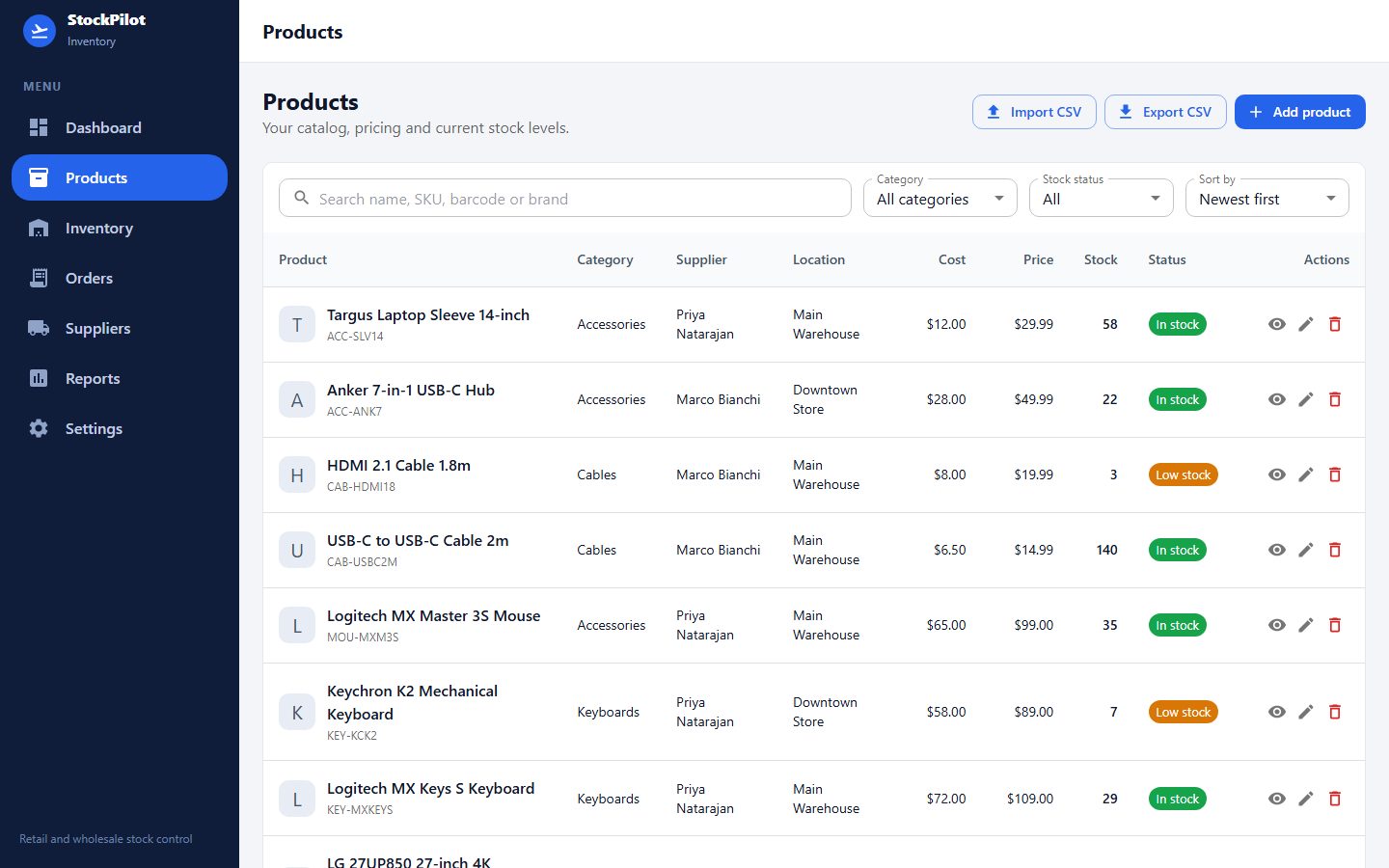
Open the AI app generator or the AI web app builder and describe the screens: client register with registrations and authorisations, monthly return board by stage, document request and upload tracker, notice register, fee and receivable ledger, and a client-money ledger.
Where a mobile app helps
A mobile app suits the principal and executives who need a due-date view, a client list with status, a document-received tick, a notice alert, and a quick call or message from a phone in a client’s shop or a bank queue. Build it after your web board has worked for a quarter. A client app is rarely worth it for one practice, and a secure web portal with WhatsApp reminders usually does the job. Start from the AI mobile app builder.
Where a logo and brand mark help
A practice mark appears on a signboard, a letterhead, an engagement letter, a receipt, a WhatsApp profile, a website header, and an email signature, so it should read in one colour and at a small size. Pick a short, calm name that is easy to say on a phone, a simple mark that suggests accuracy and trust without copying a government, tax-department, or professional-body symbol, and avoid any imagery that implies official status. Use the AI logo generator to explore marks, and test each on a signboard, a small stamp, and a phone profile before you print.

A ninety-day plan if you are starting
- 1
Days 1 to 15
Confirm your qualification, enrolments, and advertising rules with your institute, choose one or two client segments, and write your scope sheets, engagement letter, and fee tiers.
- 2
Days 16 to 45
Set up the office or home desk, secure storage, software, tokens, and calendar, draft your document cut-off and late-document policy, and onboard your first 20 to 30 clients from your network.
- 3
Days 46 to 70
Run two full monthly cycles with a second-person review, log hours per client, correct the process, and sign your first two referral partners.
- 4
Days 71 to 90
Reprice from your time logs, publish your fee tiers and website, measure on-time %, corrections, and collections, fix the three biggest gaps, and decide on your first hire from the hiring formula.
A ninety-day plan if you already run a practice
- 1
Days 1 to 15
Measure honestly: hours per client and fee per hour by service, late filings and corrections, leakage, churn, receivables, and your top three client complaints.
- 2
Days 16 to 45
Fix one leak: a low-fee service, a client who never meets the cut-off, or a reconciliation step that always fails. Rewrite the engagement letter and the cut-off policy.
- 3
Days 46 to 70
Move the calendar, documents, and reminders to one system, introduce a second-person review for every filing, and reprice the lowest-fee line.
- 4
Days 71 to 90
Lock the weekly scoreboard and plan the next two peak seasons. Only then consider a new segment, a new hire, or a second location.
Common failure patterns
- Taking every client at any price and any document timeline, then filing late for all of them
- Pricing income-tax and low-volume services below the cost of the hours they take
- Skipping the second-person review and paying for corrections and goodwill all year
- Holding client passwords or tokens informally, without authorisation or access control
- Giving tax advice outside your qualification, or promising a refund, a saving, or a notice outcome
- Agreeing to fake invoices, suppressed income, or aggressive schemes to keep a client
- Letting the calendar live in one person’s head until that person is sick in the last week of the month
- Mixing client money for taxes and fees with the practice’s own cash
- Ignoring churn and the cost of replacing a client every month
- Opening a second location before the first runs on time without the principal at every filing
When you are ready to build with Nyravi
Use this guide to decide what the practice needs. When the next step is a practice website with fee tiers and an enquiry form, a client, return, and due-date dashboard, a staff mobile app, or a brand mark for your letterhead and signboard, open Nyravi and describe that product. Keep the brief short: who uses it, what they open first, and what they finish. Nyravi builds the software. It does not give tax, legal, or accounting advice.
If you want help writing that description, ask on Support. Start on the [home page](/), or jump to the product pages linked above. For WhatsApp chatbots, start at cognitivesys.io. The operation comes first. The build carries the system once the system is clear.
Questions
What is a tax consultant and GST practice?+
A tax consultant and GST practice is a professional services business that prepares and files returns, handles registrations and amendments, keeps compliance calendars, and supports clients with notices and records, within the limits of what each professional on the team is qualified and authorised to do. It earns retainers and per-service fees, and it depends on capacity, due-date discipline, and fair fees. This guide covers operations only, not tax advice.
How do I start a tax consultancy or GST practice in India?+
Confirm your qualification, practitioner enrolment, and advertising rules with your professional body, choose one or two client segments, and write your engagement letter, fee tiers, and document cut-off. Set up secure storage, software, and a due-date calendar, onboard your first 20 to 30 clients from your network, run two full monthly cycles with a second-person review, and hire only when the capacity formula says you are full.
How much does it cost to start a tax practice?+
A solo start with a laptop, software, and a few clients can cost a few lakh rupees or less, while a small office with a team costs more. The worked example in this guide totals ₹11,40,000, including ₹1,80,000 of office fit-out, ₹2,00,000 of computers and scanners, ₹40,000 of software set-up, ₹30,000 of tokens and registrations, ₹90,000 of website and CRM, ₹1,00,000 of launch marketing, and ₹5,00,000 of working capital.
How much profit can a tax practice make?+
Profit depends on clients per executive, fee per hour, leakage, and fixed cost. In this guide’s example, about ₹4,17,000 of billed monthly revenue at a 90% contribution margin and ₹2,73,000 of fixed cost, including a ₹60,000 owner draw, earns about ₹1,02,300 a month and breaks even at about ₹3.03 lakh of billed revenue. Real results vary by city and client mix, and ramp-up takes months.
How should a GST practice price its retainers?+
Set tiers by invoice volume and complexity, use your own time logs to find hours per client, and price at your cost per hour divided by one minus your target margin. In the worked example, a cost of about ₹539 an hour and a 40% margin support about ₹1,000 for a small client, ₹1,500 for a mid-size client at 1.6 hours, and ₹2,700 for a larger one. Publish your document cut-off and late-document policy with the fee.
How many clients can one GST executive handle?+
Divide productive hours by hours per client. In this guide’s example, an executive with about 130 productive hours a month and 1.6 hours per client can carry about 81 clients, so two executives are full at about 160 clients. Measure your own hours from time logs, because invoice volume, data quality, and reconciliation work change the number a lot.
What are the rules on who can file and represent in tax matters?+
Rules differ by law and qualification. Certain work such as audit and certification is reserved for chartered accountants, appearances before some authorities for advocates or other authorised persons, and practitioners may need enrolment for specific portals. Rules and conditions change over time, so confirm with your professional body, the relevant authority, and a qualified professional. This guide is not tax or legal advice.
How do I protect client data and credentials in a tax practice?+
Get written authorisations before acting on any portal, avoid holding passwords informally, control access to digital signature tokens, use a secure upload route with an access list, and keep retention and deletion rules. Follow the Digital Personal Data Protection Act, 2023, take professional-indemnity insurance, and confirm your practice with a qualified professional.
Can a WhatsApp chatbot help a tax practice?+
Yes, for reminders and logistics only. A chatbot can share office hours and published fees, book calls, collect enquiries with consent, send document checklists and due-date reminders from an approved calendar, and acknowledge documents received. It must never answer whether something is taxable, deductible, or due, interpret a notice, or promise an outcome, which go to a qualified person. CognitiveSys, the parent company behind Nyravi, builds WhatsApp chatbots and shared inboxes. Start at cognitivesys.io.
Does a tax practice need a website, an app, or Nyravi?+
A tax practice benefits most from a simple website with services, fee tiers, qualifications, process, and clear disclaimers, then from a web app once clients, returns, documents, and due dates outgrow a spreadsheet. A staff mobile app helps after the web board works. Nyravi can build the website, dashboard, staff app, or logo from a plain-language description. For WhatsApp chatbots, start at cognitivesys.io. This guide covers business operations only, not tax, legal, or accounting advice.